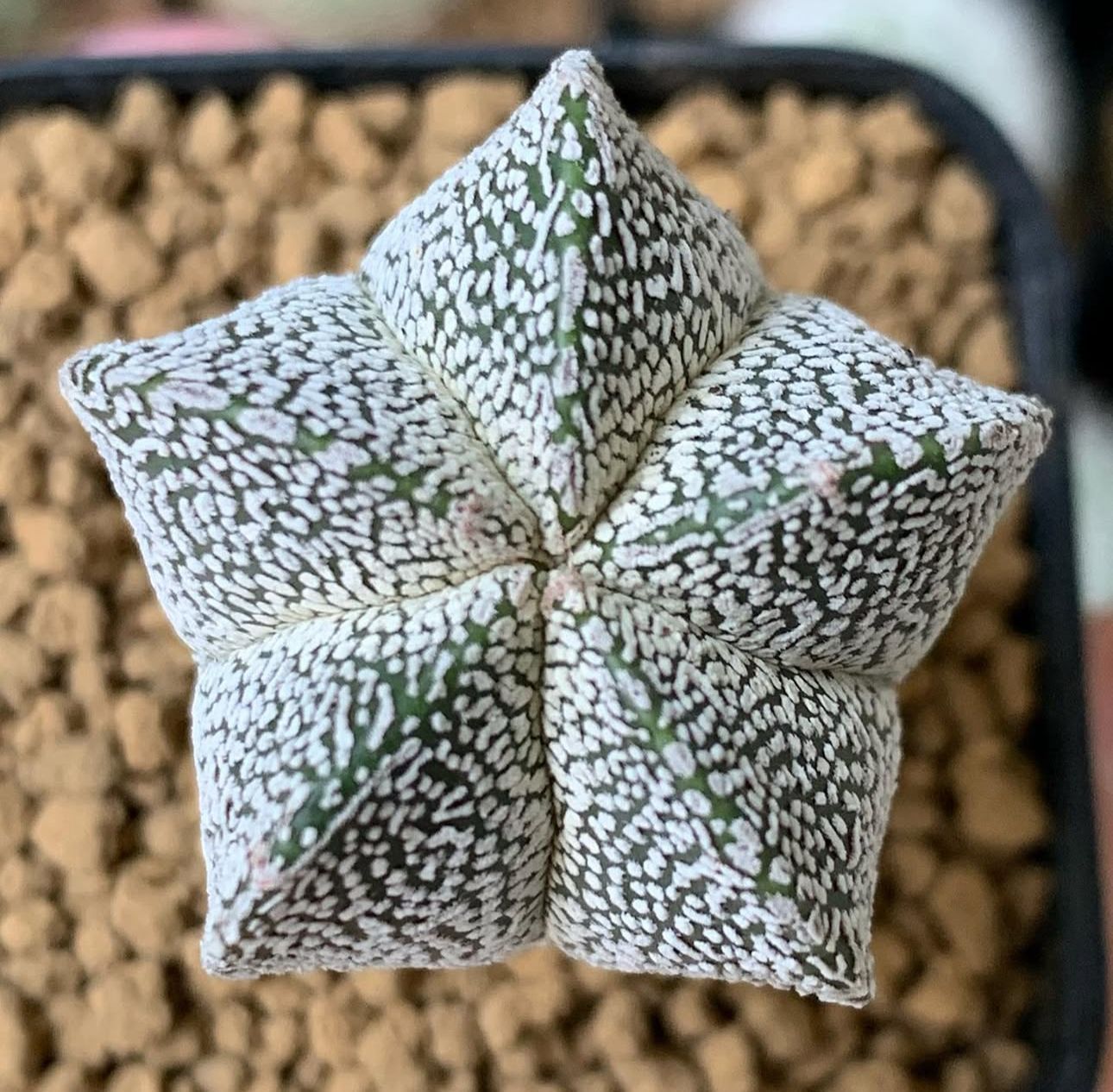
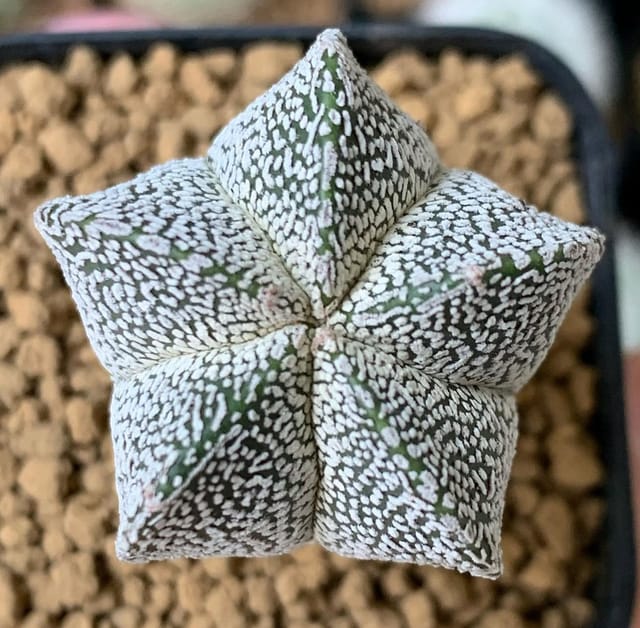
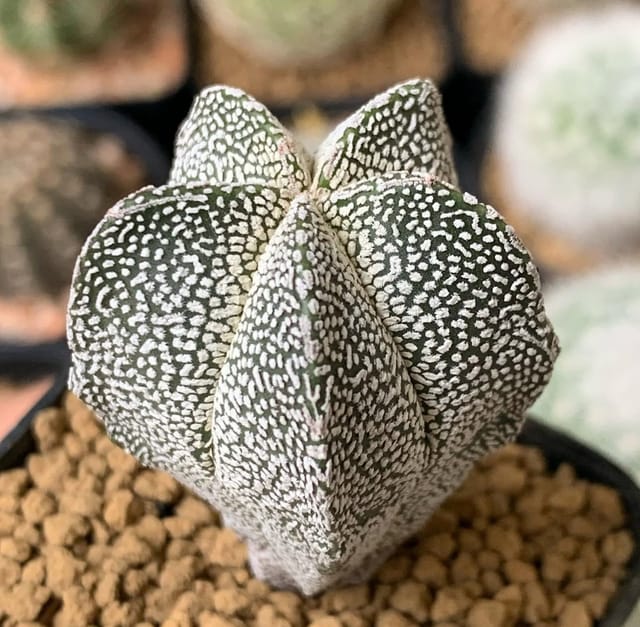
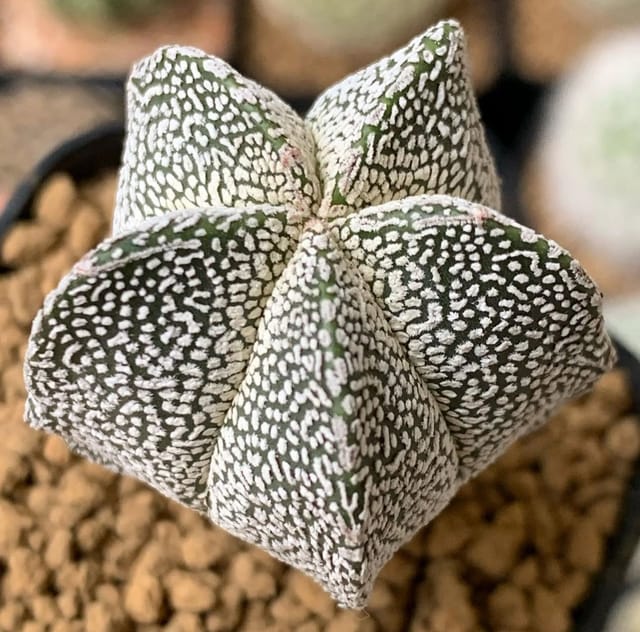
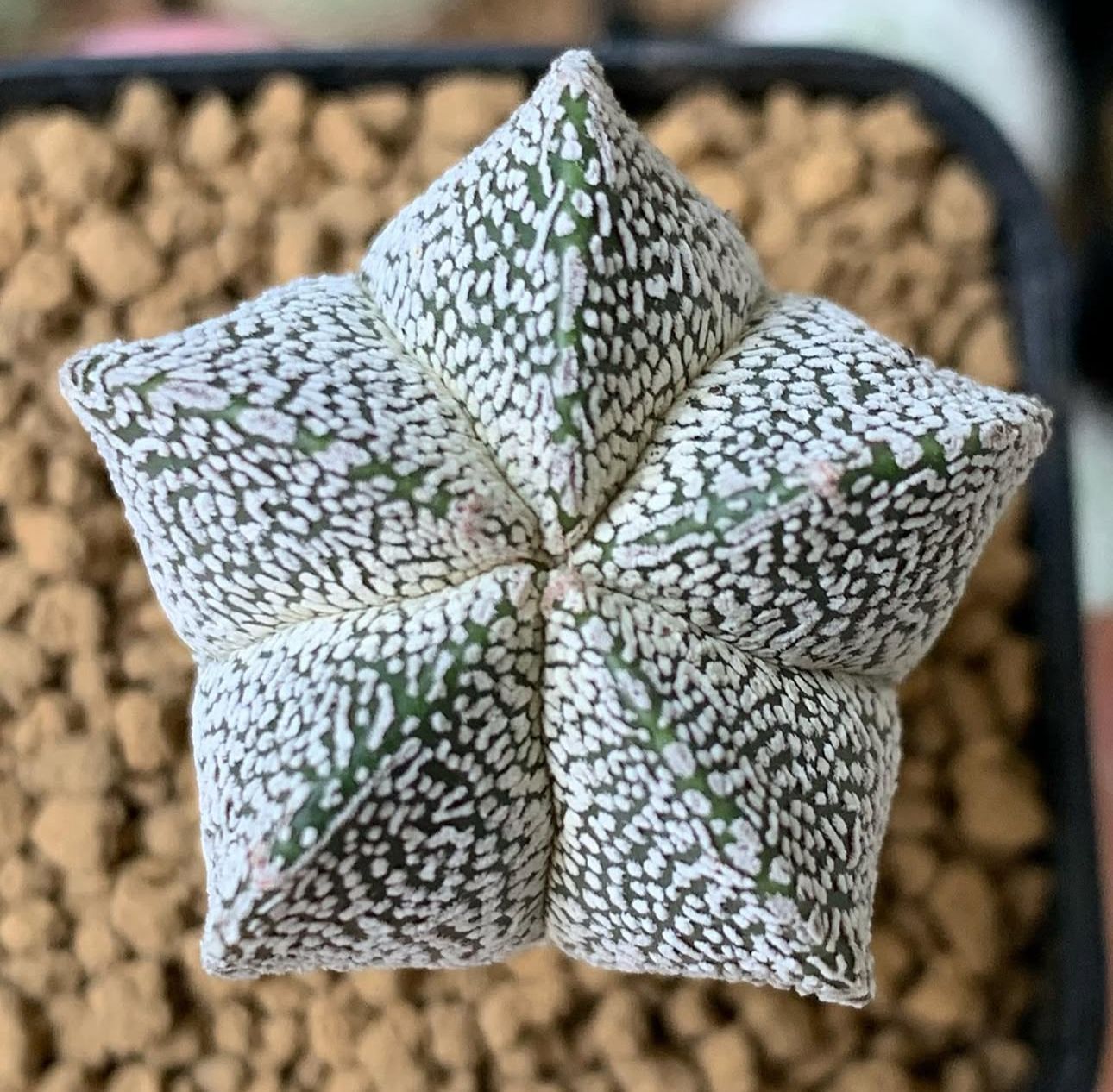
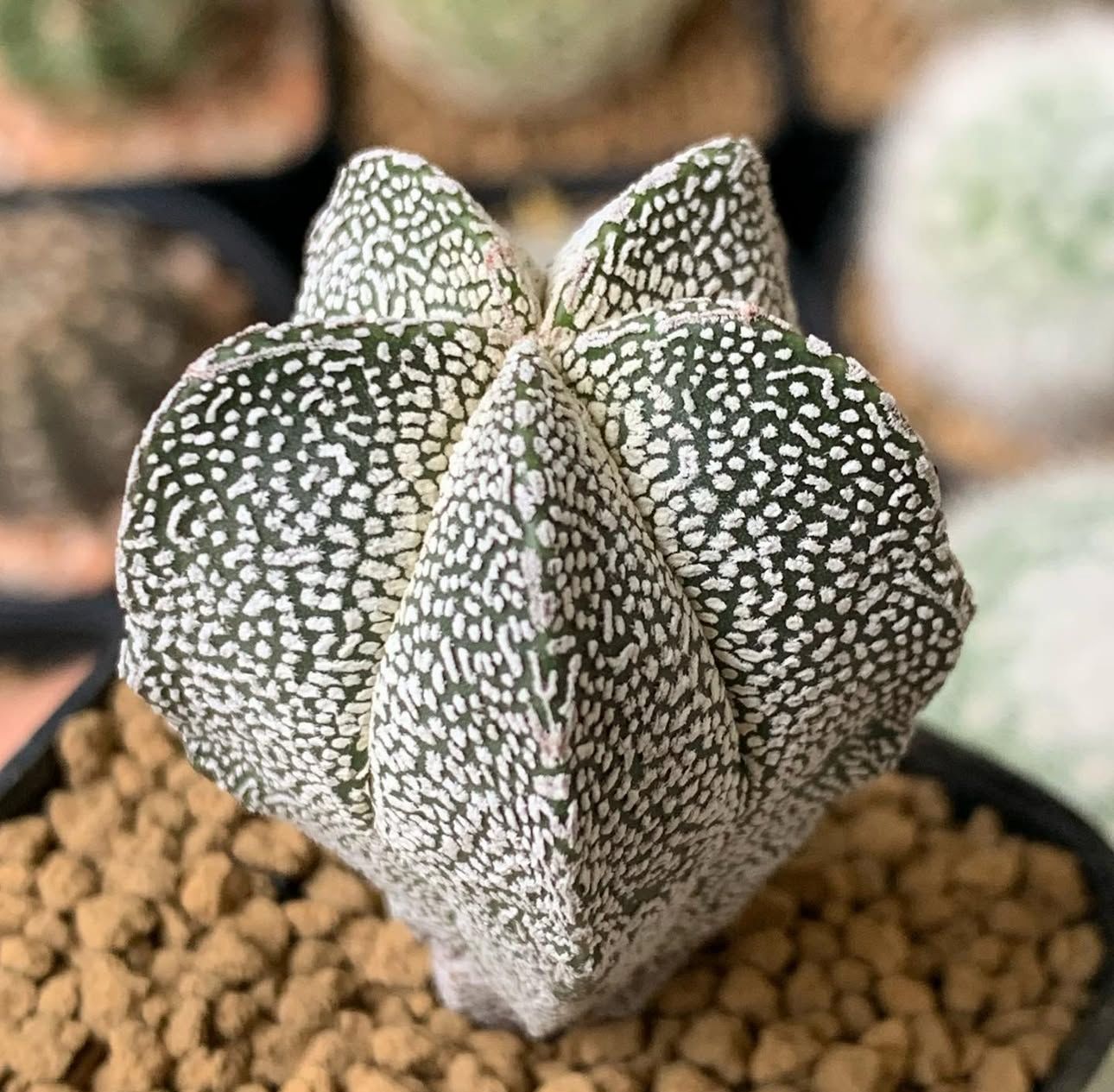
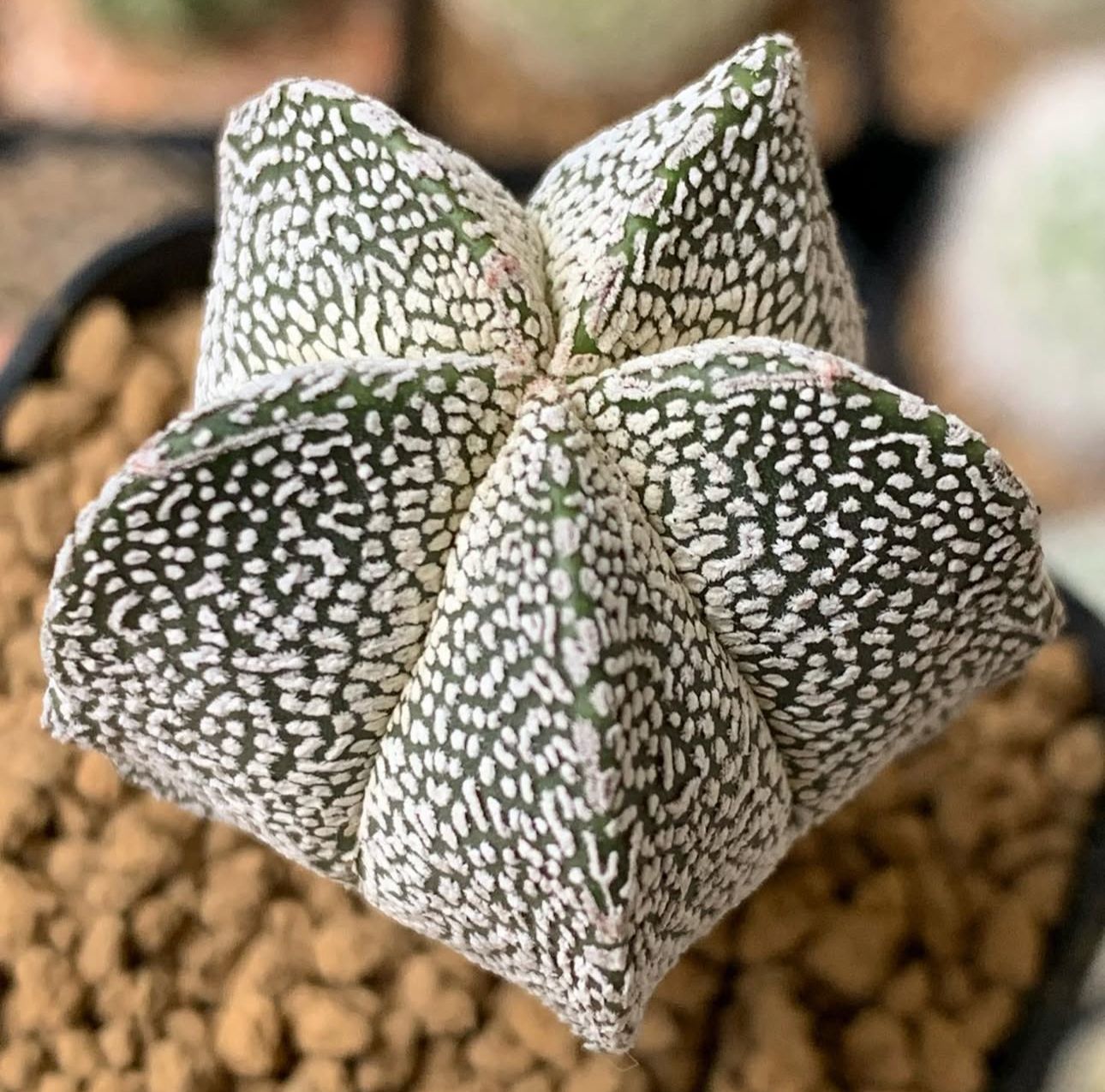
The Astrophytum myriostigma cv. 'Onzuka' is often considered the "holy grail" for collectors of the Myriostigma (Bishop’s Cap) genus. Created by the Japanese breeder Tsutomu Onzuka in the late 1970s, it is a mutation that turned the standard white dots of a cactus into a dense, snowy white "map" of interconnected patterns.
If the 'Super Kabuto' is a splatter painting, the 'Onzuka' is fine Japanese calligraphy.
What Makes 'Onzuka' Special?
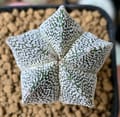
In a standard Astrophytum myriostigma, the white scales (trichomes) are small, distinct dots. In an 'Onzuka', these scales are larger, thicker, and often V-shaped or branched, giving the plant a heavy, textured white "crust."
Visual Characteristics
The "V" Pattern: The most prized specimens have clear, white "V" markings along the ribs.
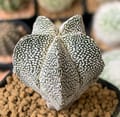
The Body: It typically has 3 to 5 ribs (the 4-ribbed "Quadricostatum" is particularly popular). Unlike the A. asterias we discussed, this plant grows more columnar as it ages, rather than staying a flat disc.
Spinelessness: Like all A. myriostigma varieties, it is completely smooth to the touch—no spines, just the corky texture of the white scales.
Key Tips for Success:
Light: Provide bright, direct light or, for some, filtered sun. Insufficient light causes weak, thin growth (etiolation).
Watering: Allow soil to dry out completely between waterings. In summer, water every 10–20 days; reduce significantly in winter.
Soil & Drainage: Use a specialized, airy cactus potting mix (e.g., potting soil mixed with perlite or pumice).
Potting: Choose containers with drainage holes; terracotta is ideal as it dries out quickly.
Maintenance: Fertilize once a month during the growing season (spring/summer). If the plant becomes too sun-stressed (yellow/brown), provide 30-60% shade.








![Khejri Live Plant, ( Sangri wali Khejdi), Asli Shami Ka Ped, Prosopis Cineraria Plant , khejdi, khejari, Real Shami [RAJ GARDEN PLANTS]](https://www.paudhewale.com/s/660a356584d1ac2391ae69de/6a0b06c62aaff710c73daf98/project_20240512_2207356-01-640x640.png "Khejri Live Plant, ( Sangri wali Khejdi), Asli Shami Ka Ped, Prosopis Cineraria Plant , khejdi, khejari, Real Shami [RAJ GARDEN PLANTS]")