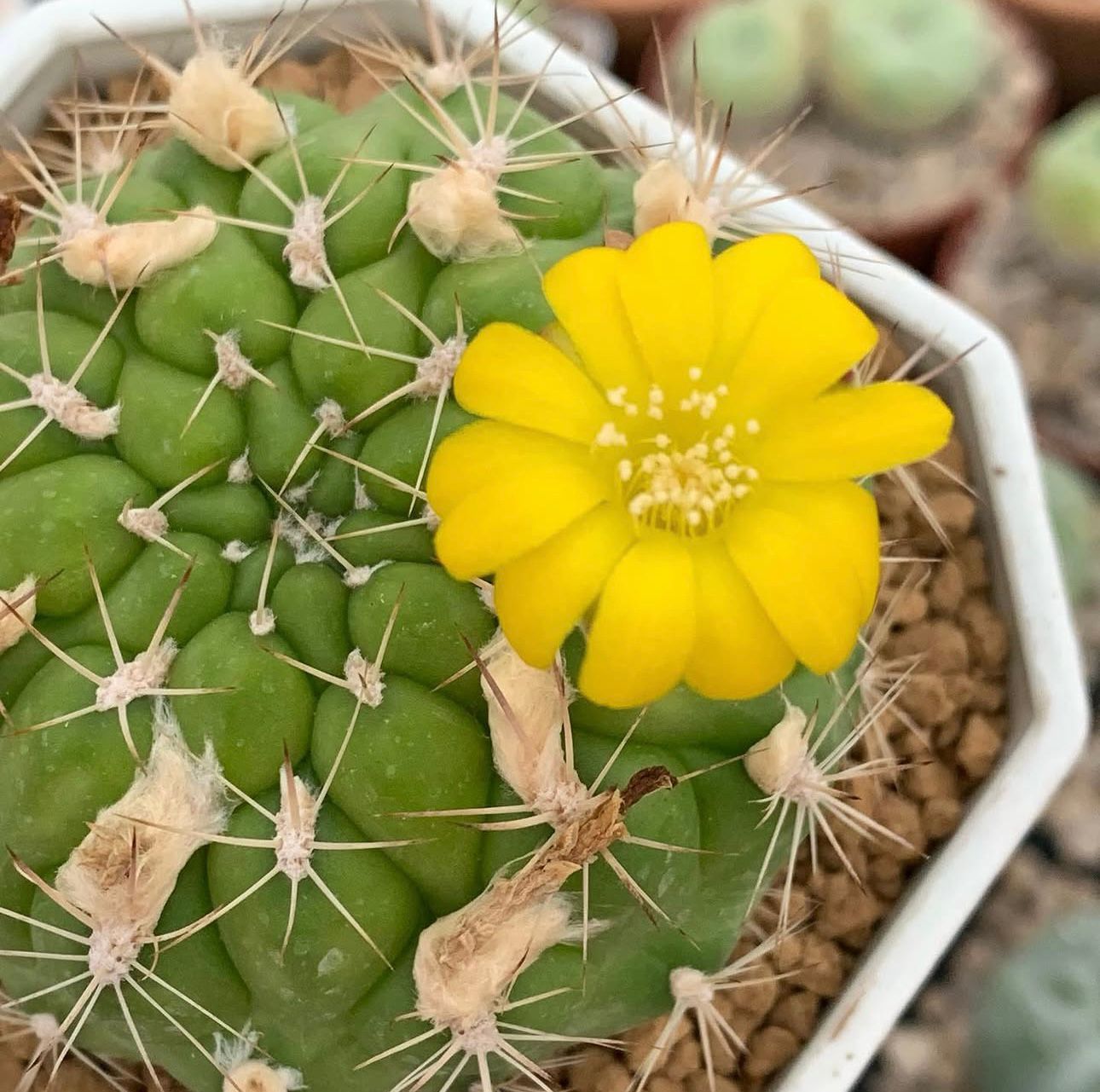
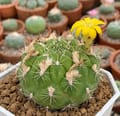
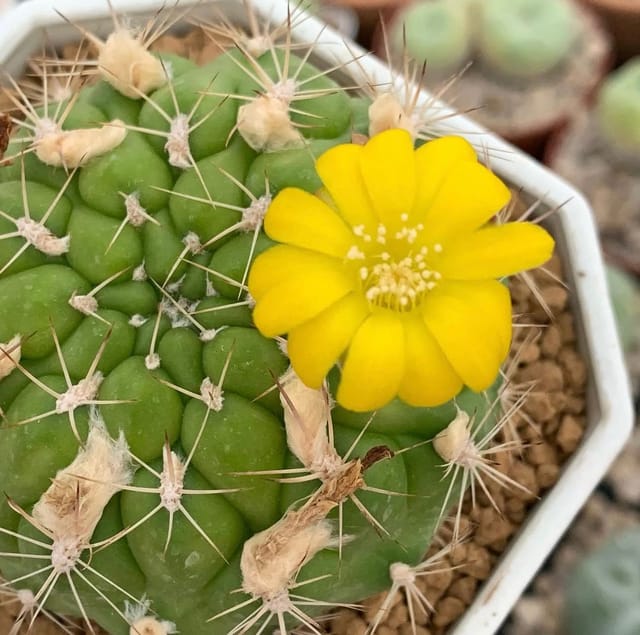
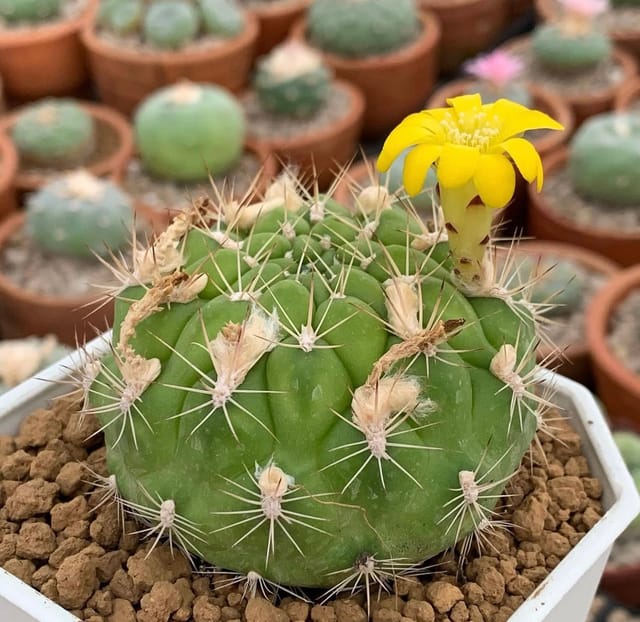
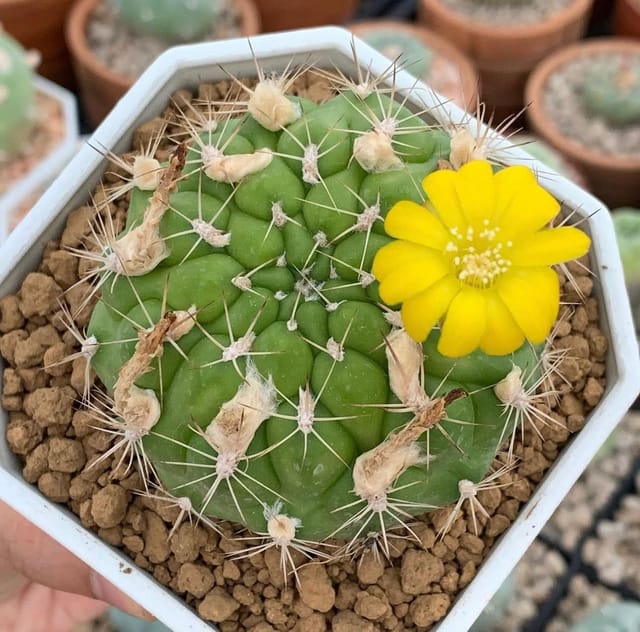
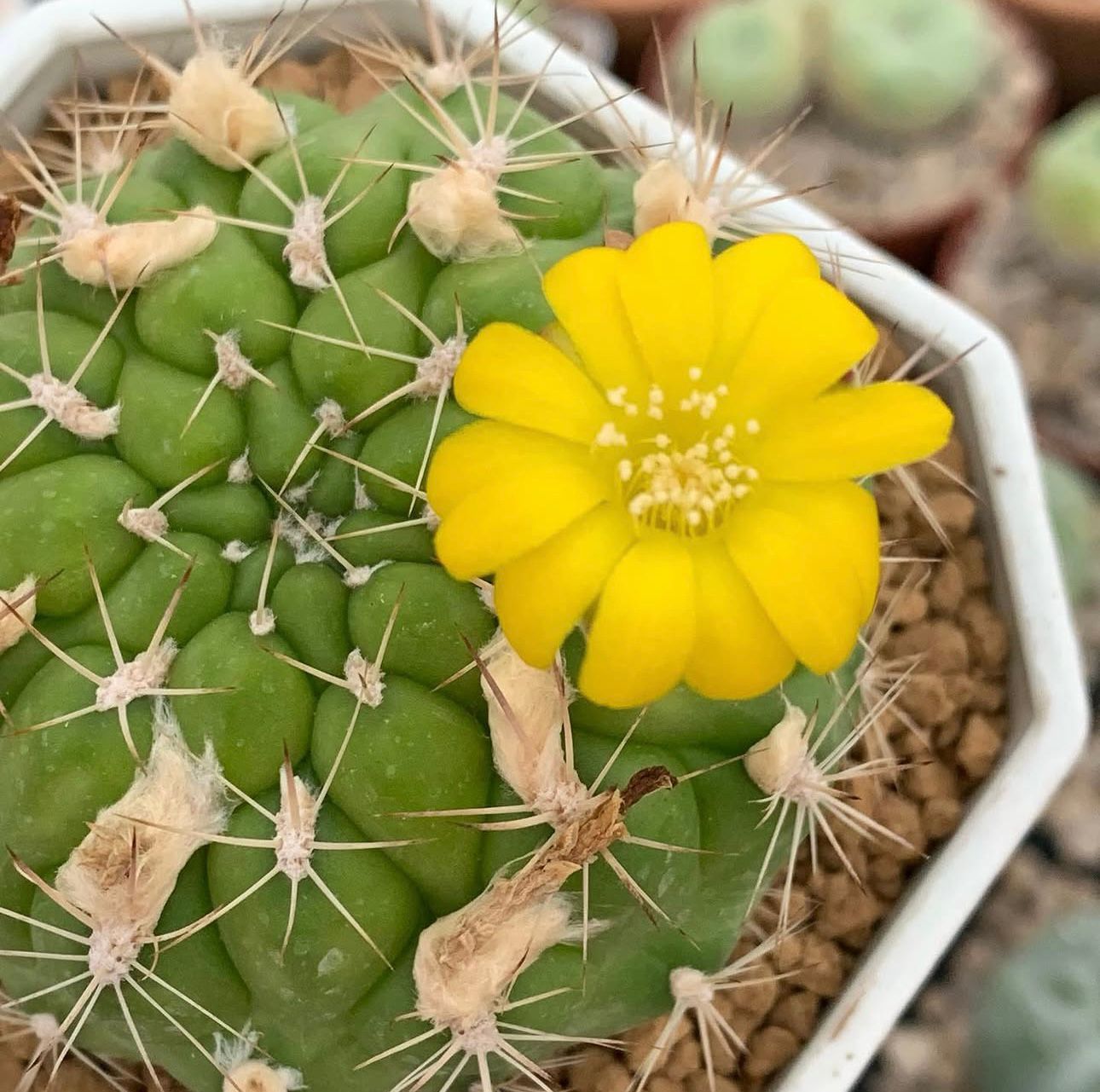
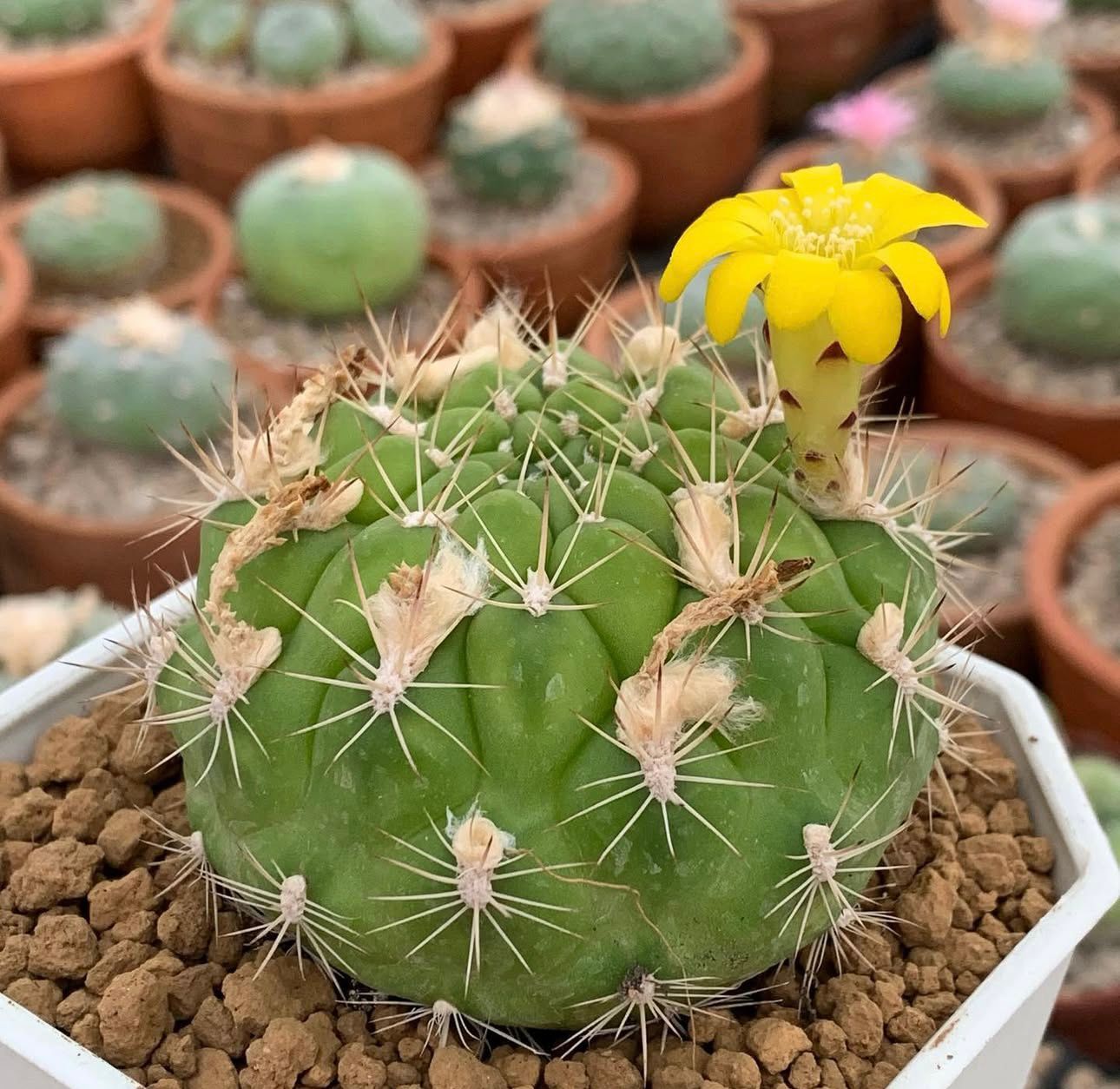
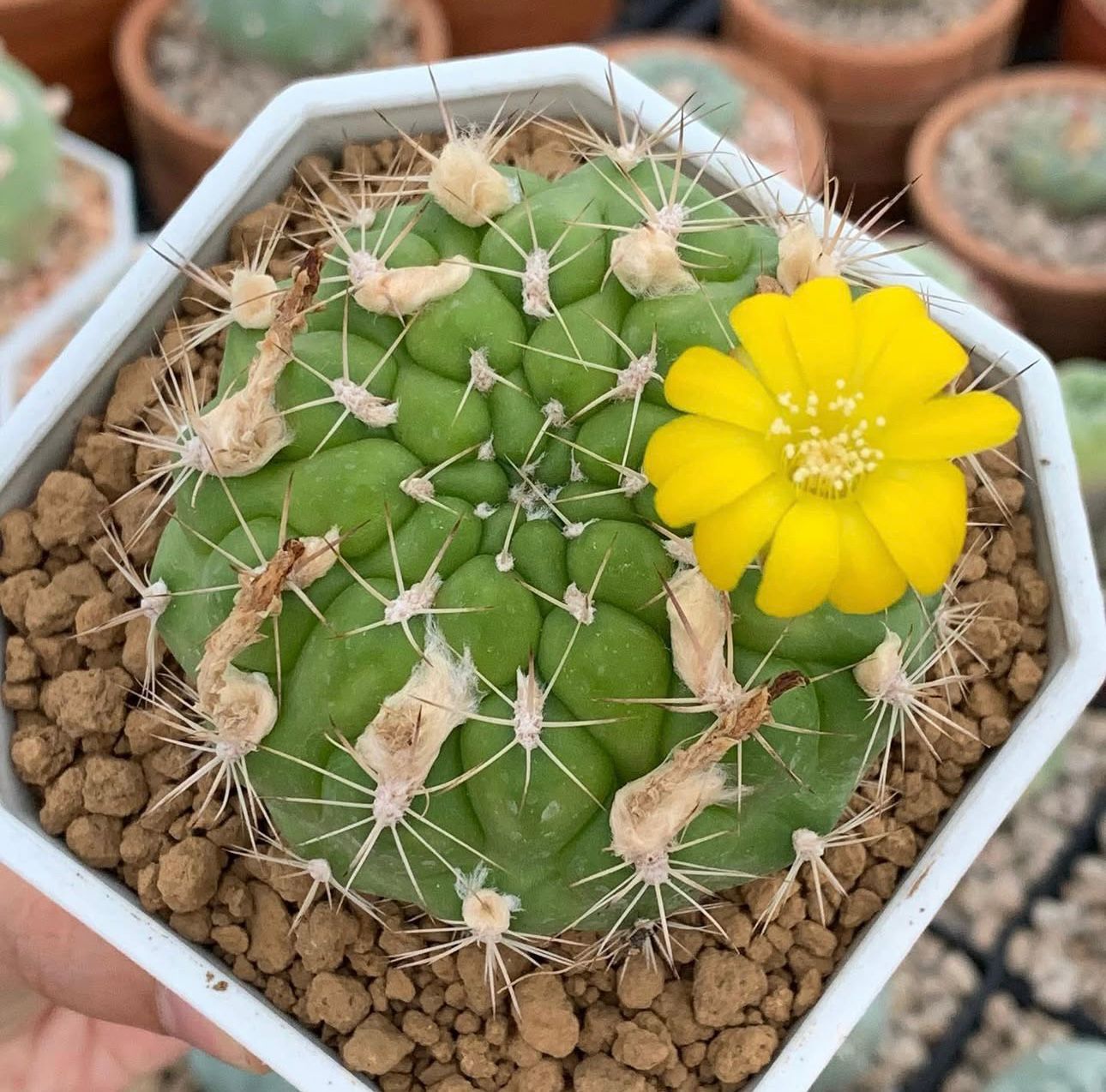
The Weingartia neocumingii f. prolifera (often labeled by its synonym Rebutia neocumingii) is essentially the "overachiever" of the Weingartia family. While many cacti are solitary or slow to cluster, this "prolifera" form is genetically wired to produce a crowd of offsets.
It’s a rugged, high-altitude specialist from the Andes that brings a lot of texture and bright color to a collection without being overly demanding.
What Makes it Unique?
The name "prolifera" refers to its proliferous nature—meaning it produces many "pups" or offsets from the base and sides of the main stem.
Growth Habit: It quickly transforms from a single globe into a dense, mounded cluster of small heads.
The Spines: It features stiff, pectinate (comb-like) spines that can range from golden yellow to a deep brownish-orange. These spines often obscure the green body of the plant, giving it a fuzzy or bristly appearance.
The Flowers: Unlike many cacti that bloom from the top (apex), Weingartia are known for blooming from the sides or lower down the body. The flowers are typically a vibrant, saturated yellow or orange-yellow.
Care & Maintenance
Because these originate from high altitudes in Bolivia and Peru, they have slightly different needs than your average desert cactus. They like a "cool-bright" environment rather than "stagnant-hot."
1. Light and Air
They crave high light levels to keep their spine color intense and their growth compact. However, they require good airflow. In a stagnant, humid greenhouse, they can become prone to fungal issues.
2. Temperature
They are surprisingly hardy. They can tolerate brief dips near freezing if they are kept completely dry. They actually benefit from a cool winter dormancy to trigger heavy blooming in the spring.
3. Soil and Water
The Mix: Use a very mineral-heavy substrate (pumice, perlite, and coarse sand).
Watering: They have a thick taproot that is sensitive to standing water. Water deeply during the growing season, but ensure the pot drains immediately
Key Tips for Success:
Light: Provide bright, direct light or, for some, filtered sun. Insufficient light causes weak, thin growth (etiolation).
Watering: Allow soil to dry out completely between waterings. In summer, water every 10–20 days; reduce significantly in winter.
Soil & Drainage: Use a specialized, airy cactus potting mix (e.g., potting soil mixed with perlite or pumice).
Potting: Choose containers with drainage holes; terracotta is ideal as it dries out quickly.
Maintenance: Fertilize once a month during the growing season (spring/summer). If the plant becomes too sun-stressed (yellow/brown), provide 30-60% shade.