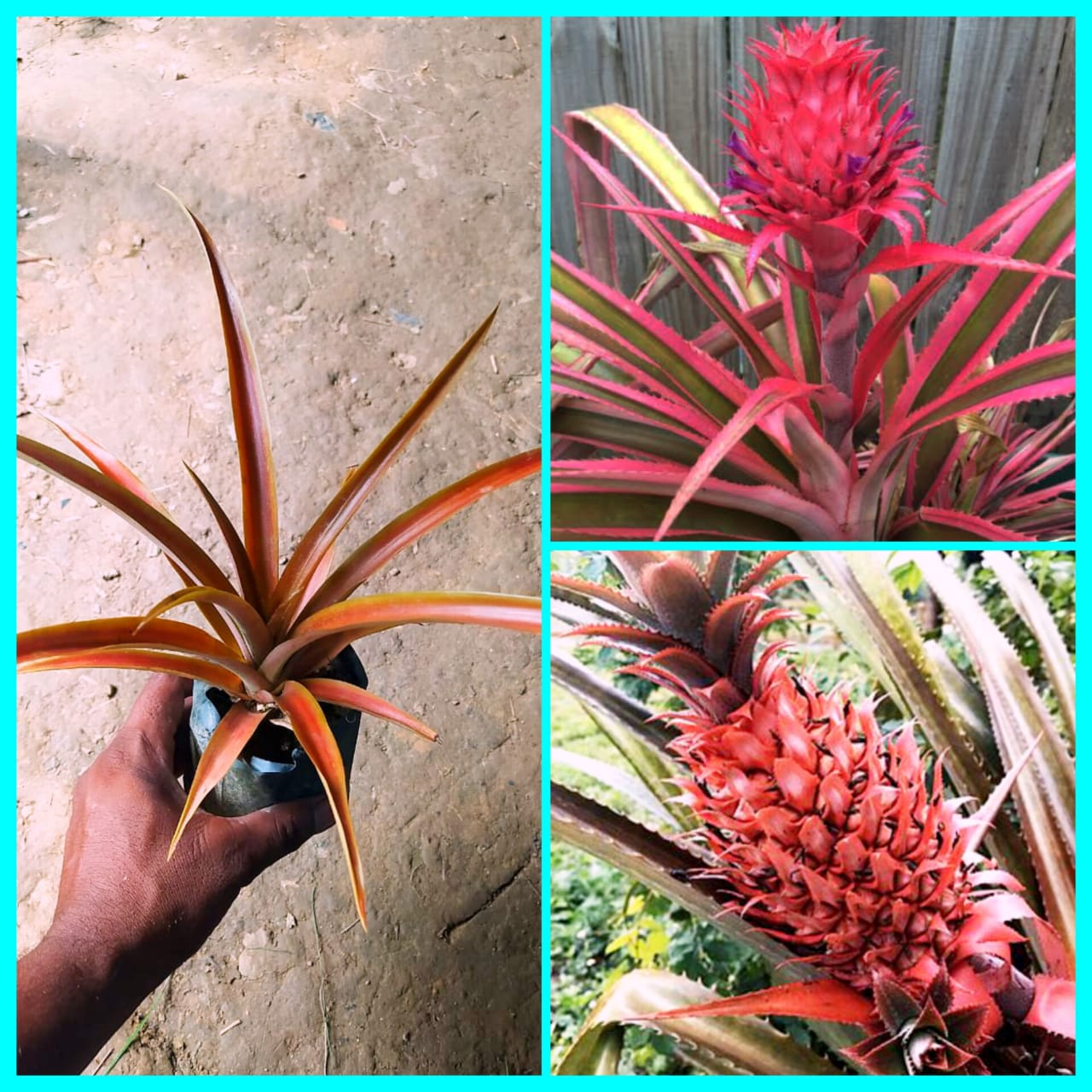
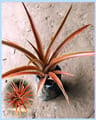
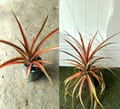
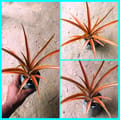
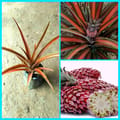
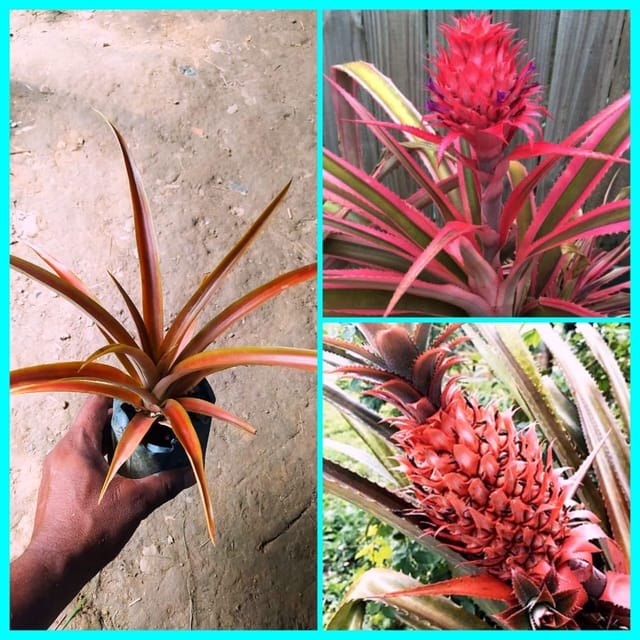
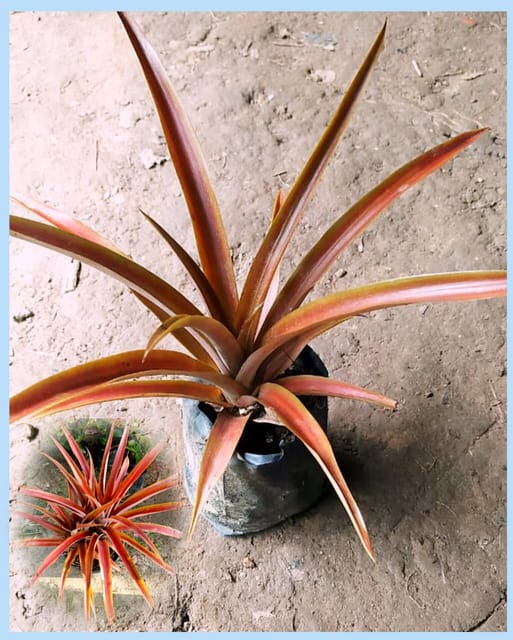
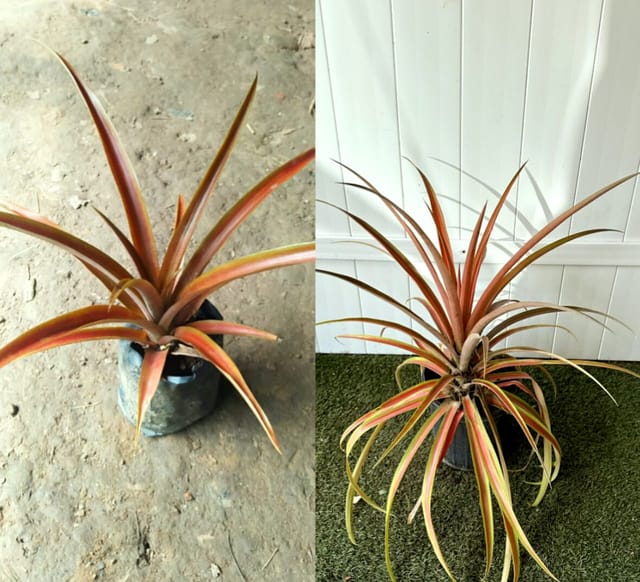
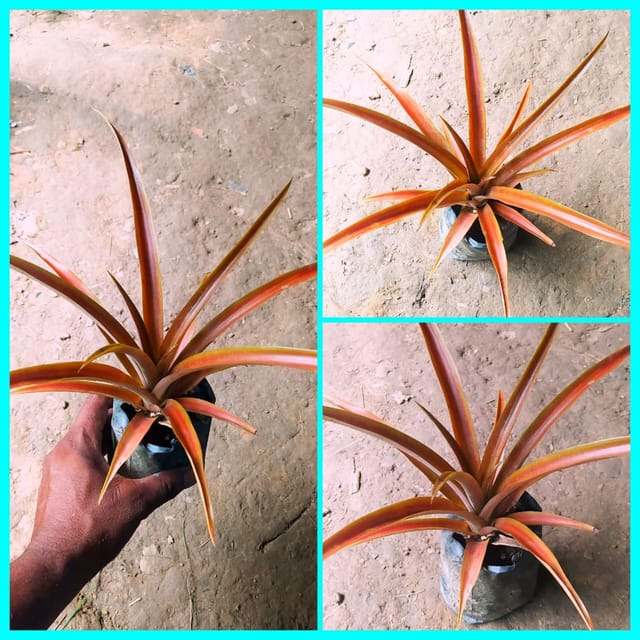
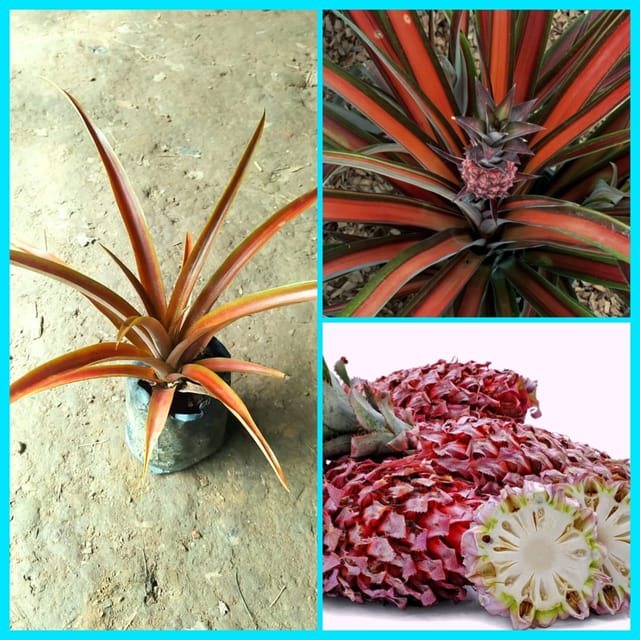
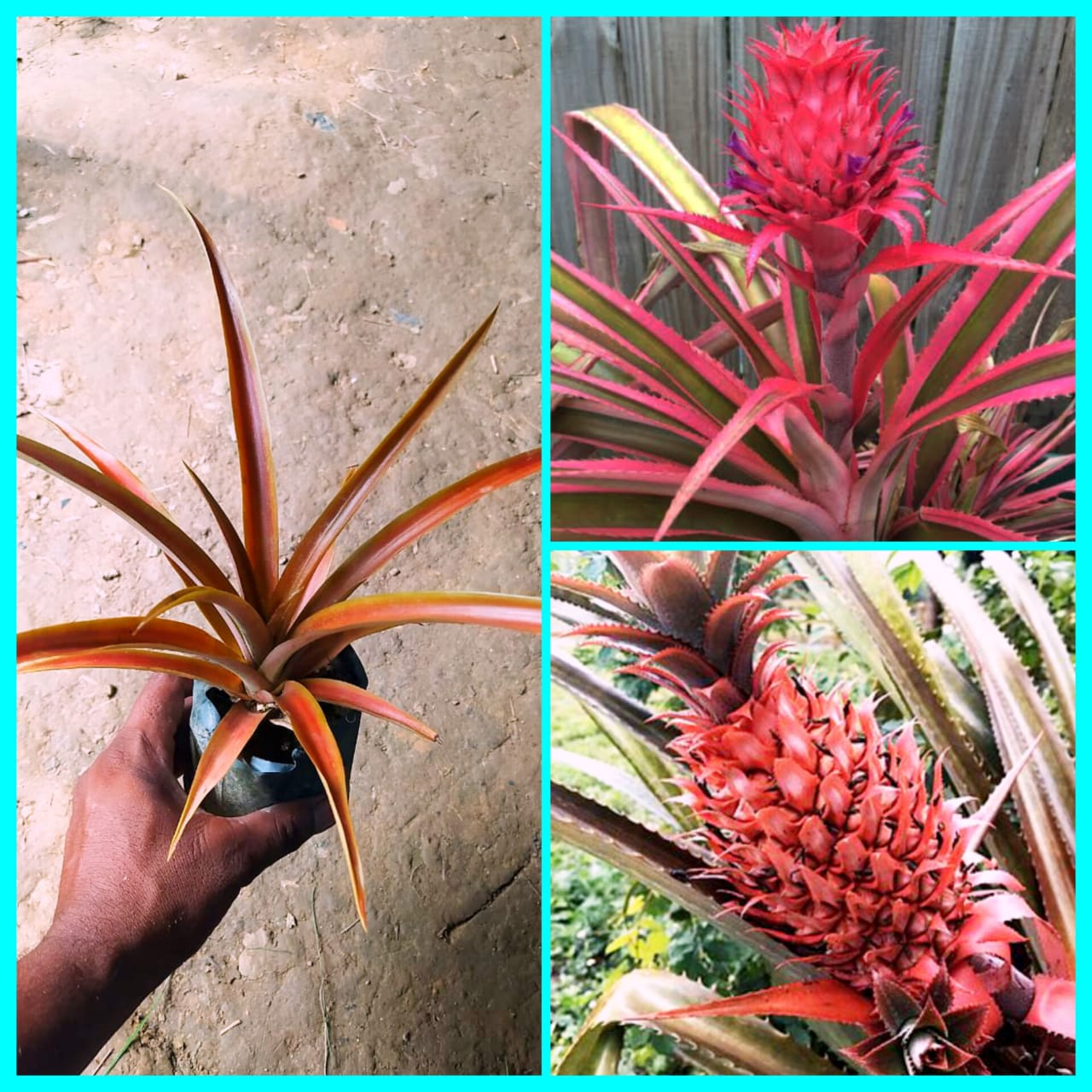
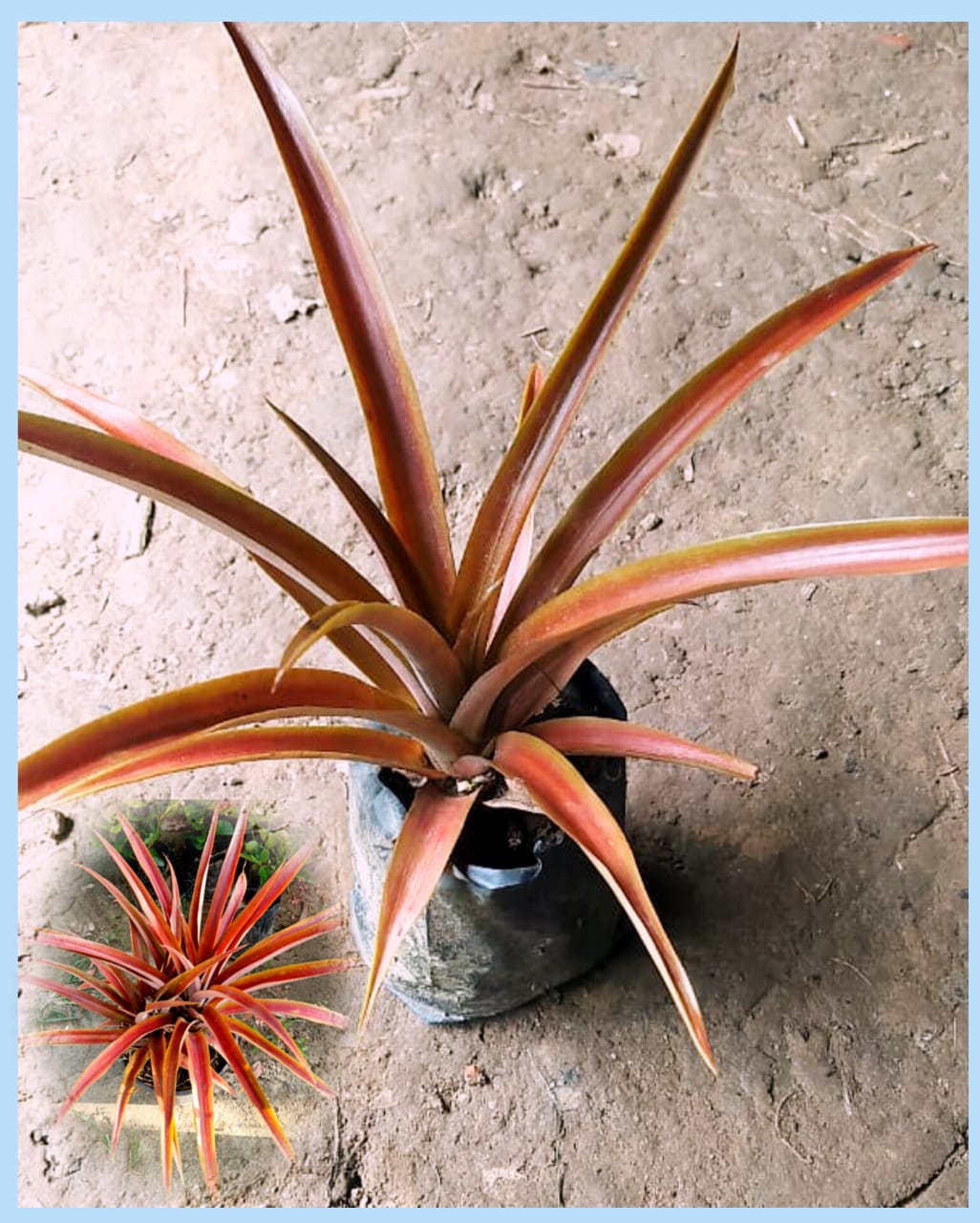
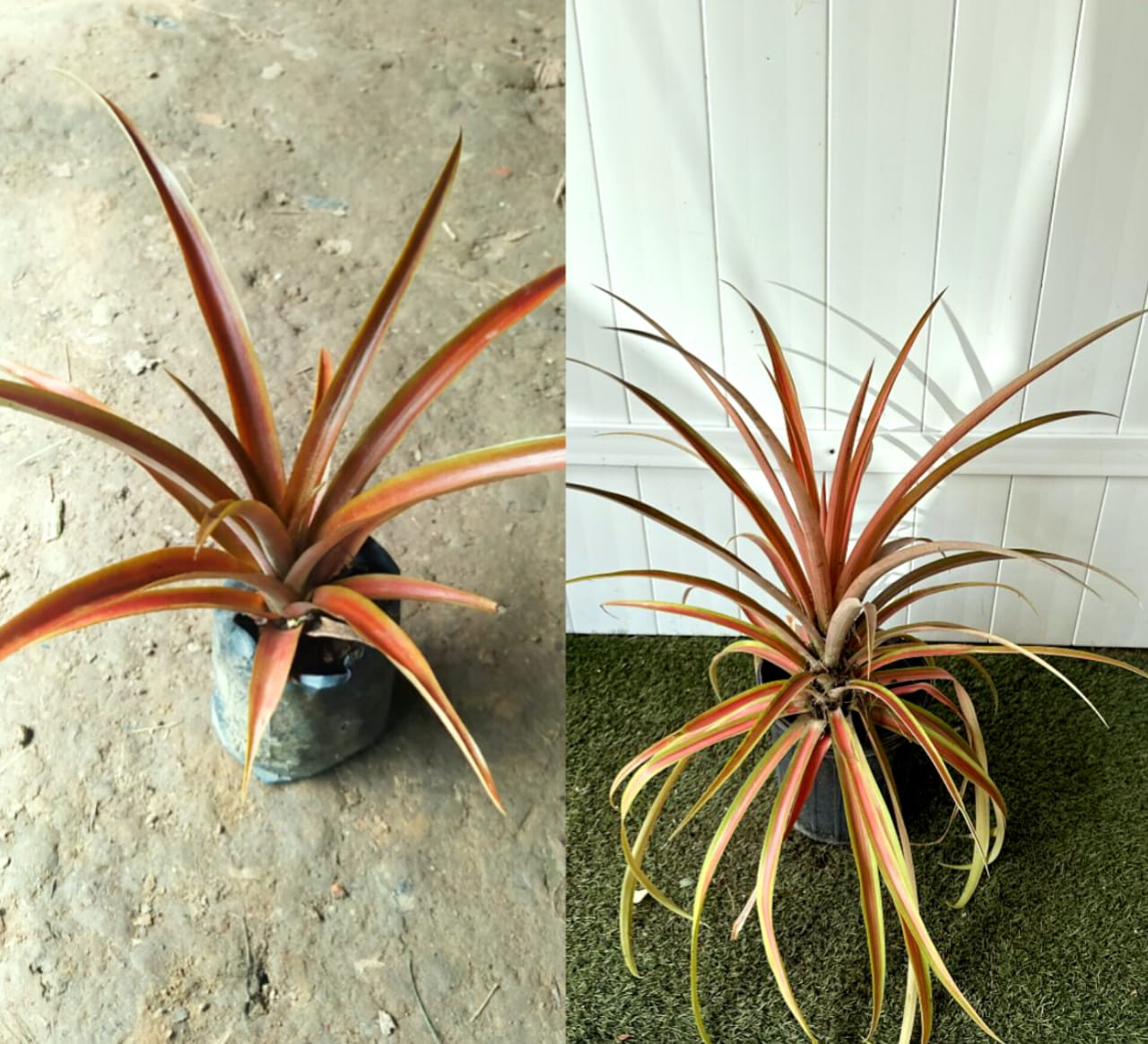
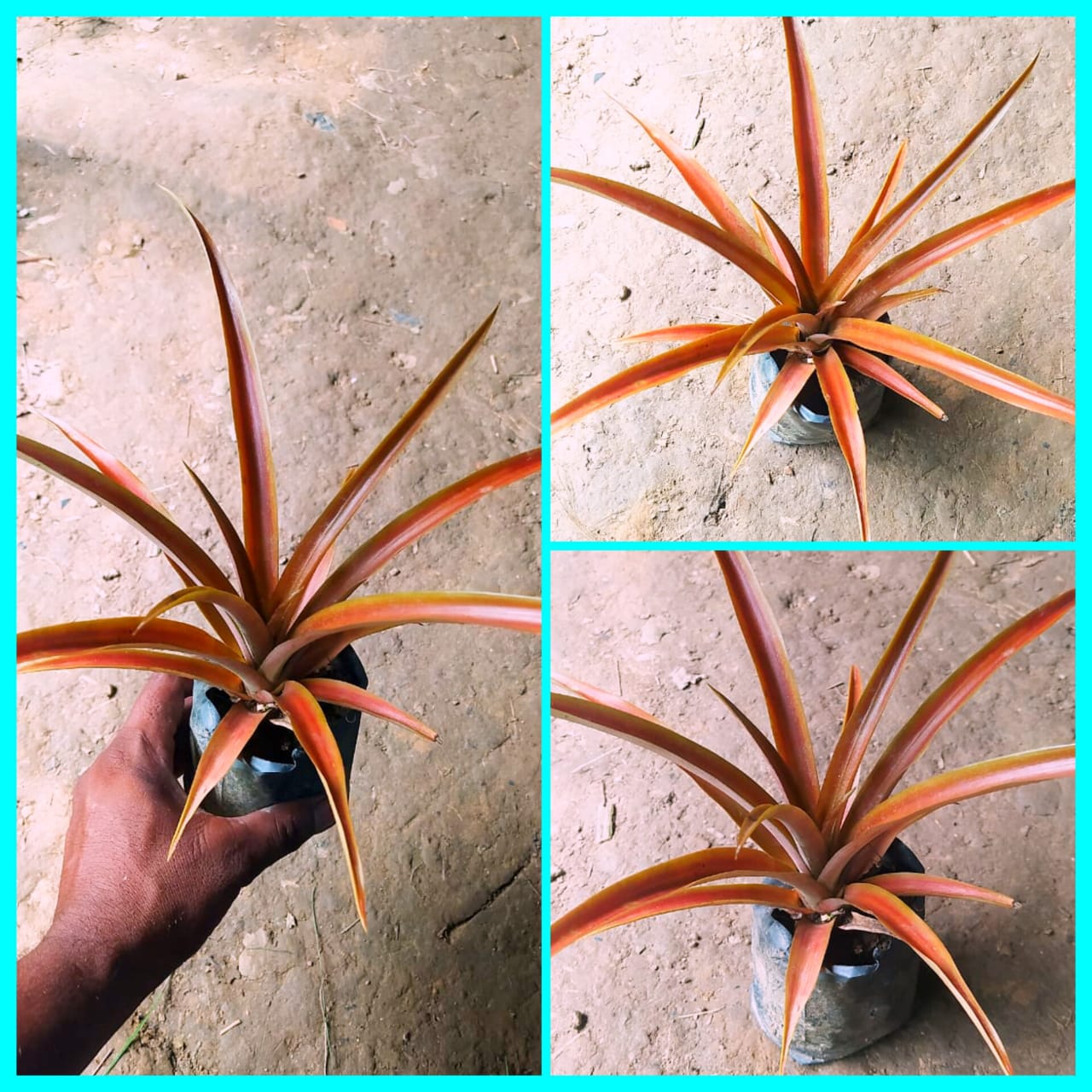
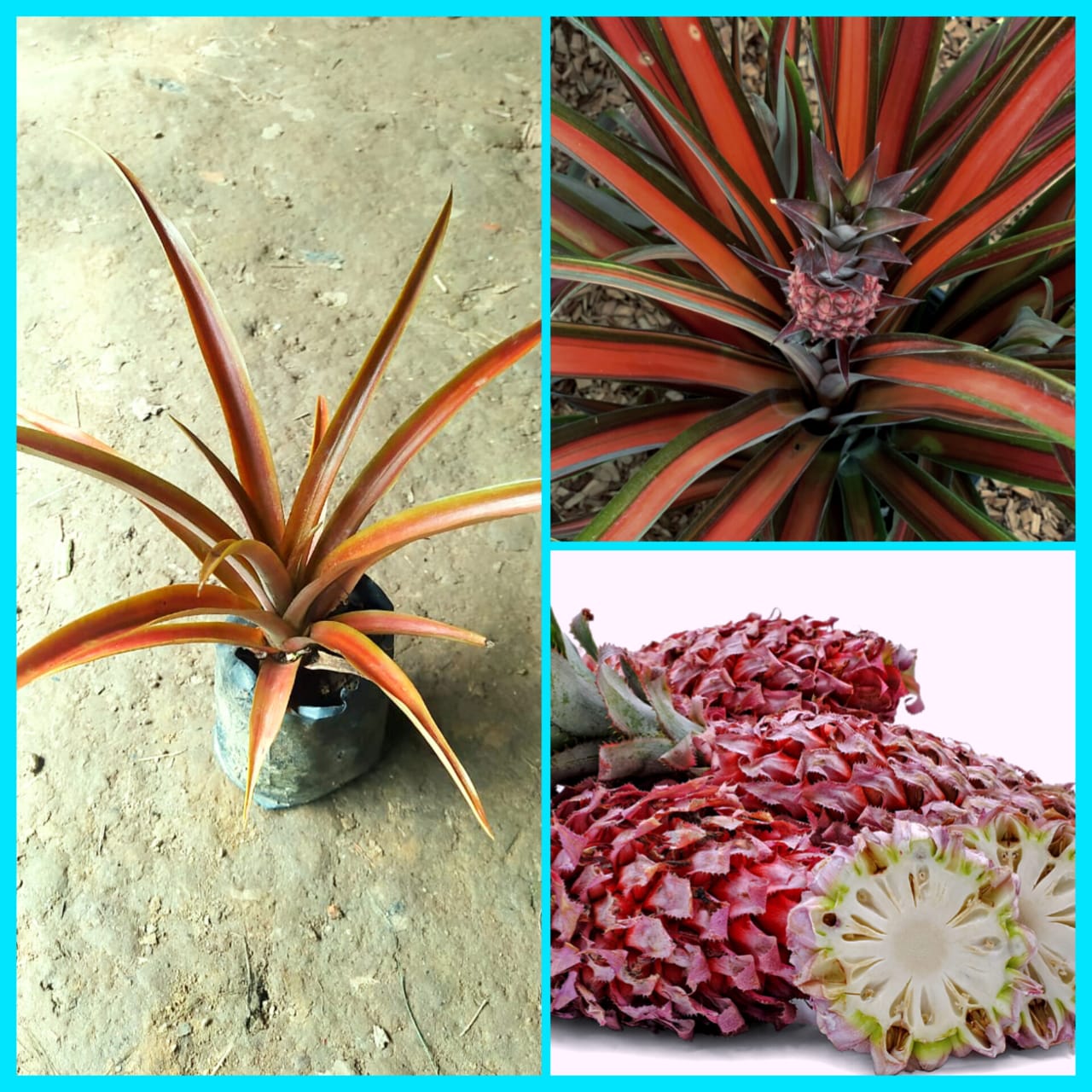
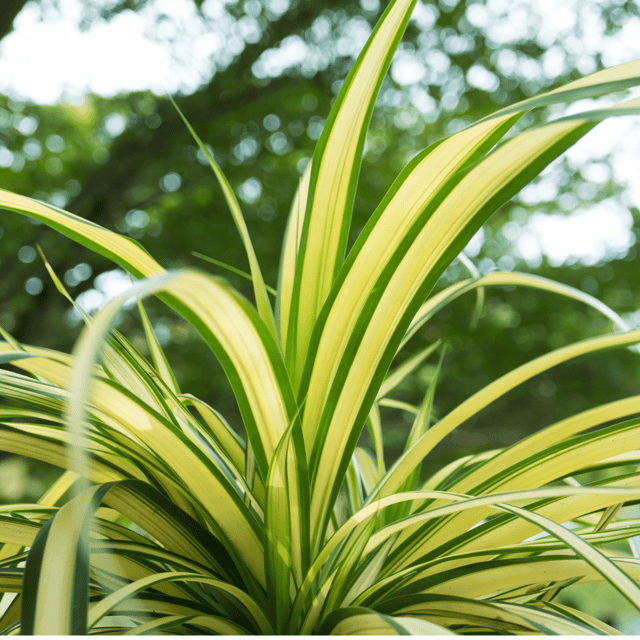
1Leaves: The leaves are typically green and sword-like, often with a red or red-hued edge. Some varieties have more vibrant red-orange leaves.
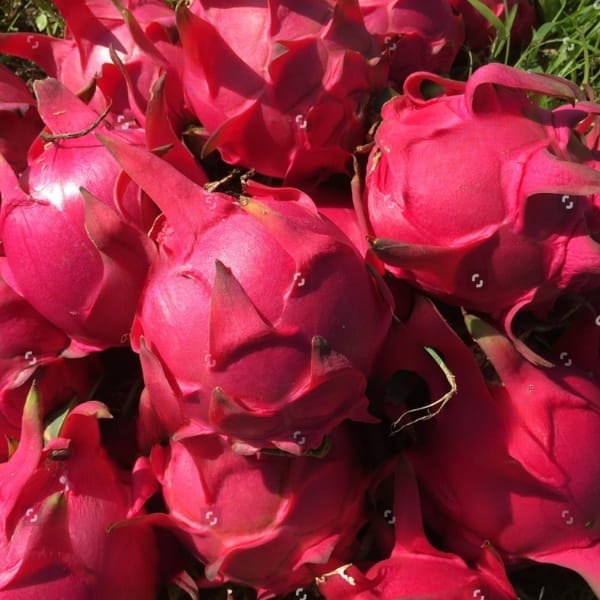
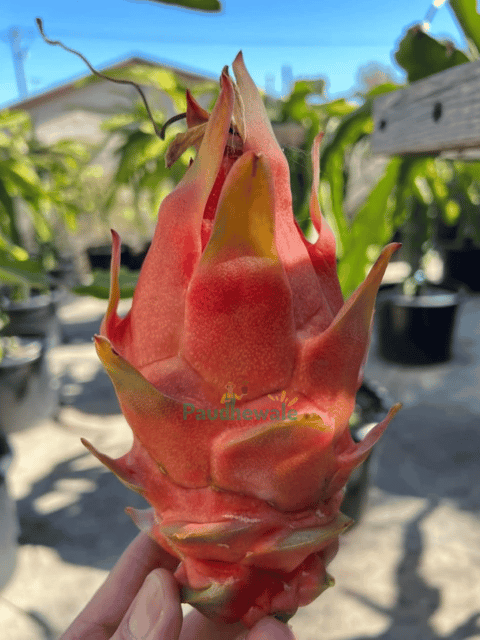
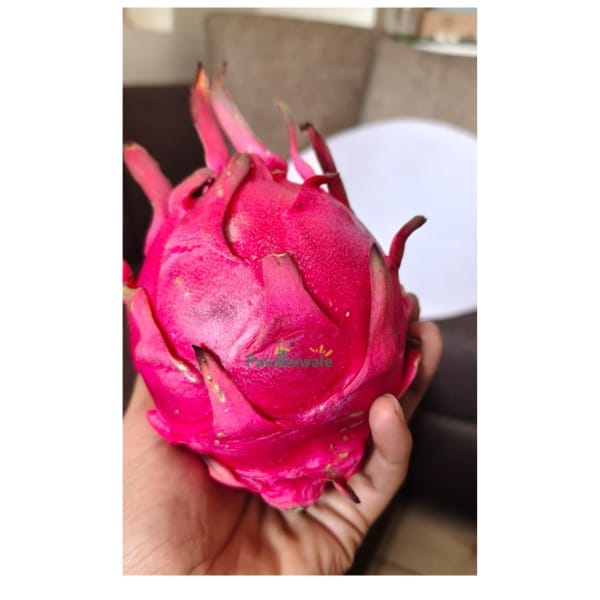
2Fruit: The fruit is small, oblong to cylindrical, and has a tough, waxy skin that is reddish-pink to scarlet in color. The flesh can be pinkish-yellow, dense, and has a sweet and slightly tangy taste, but is often full of seeds and less juicy than commercial pineapples.
3Crown: The fruit is topped with a leafy, spiky crown that can have green and red variegation.
4Flowers: The plant produces small, violet-purple flowers that emerge from spiny, red or pink bracts on an egg-shaped inflorescence.
5Light: Prefers full sun but can also tolerate partial shade.
6Soil: Needs well-draining, acidic soil with a pH between \(4.5\) and \(6.0\).
7Watering: Moderate watering is needed. Allow the soil to dry slightly between waterings.
8Maintenance: It is a low-maintenance plant. Pruning is generally only required to remove old or dead leaves.
9Botanical classification: It is a member of the Bromeliaceae family and is botanically classified as Ananas bracteatus.
10Nutritional value: The fruit is a good source of Vitamin C, fiber, manganese, and the anti-inflammatory enzyme bromelain.
11Edible vs. Ornamental: While the fruit is edible, the plant is often grown ornamentally for its striking appearance rather than for harvesting large quantities of fruit.









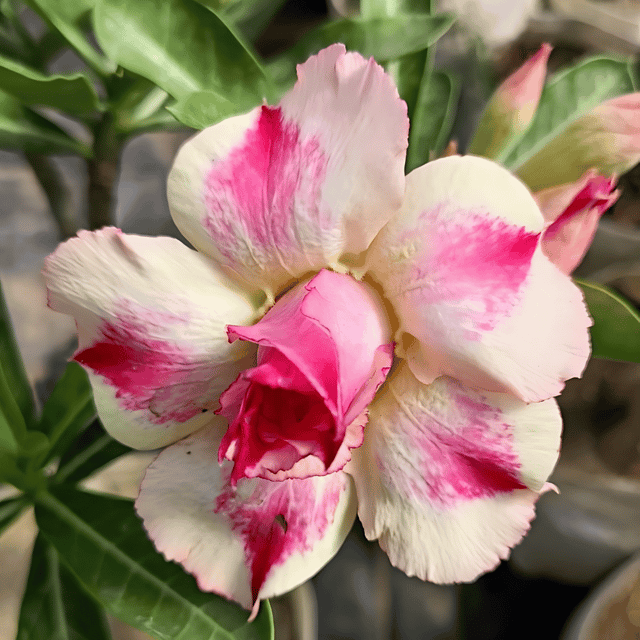
![[Plants Glory] Verigated Azalea Flower Plant (PG-100451)](https://www.paudhewale.com/s/660a356584d1ac2391ae69de/6a0adf68557c79ea33ba499a/24457__1766832145739_771u9oib3feqv5t-640x640.jpg "[Plants Glory] Verigated Azalea Flower Plant (PG-100451)")
![[Plants Glory] Yesterday Today And Tomorrow Flower Plant (Brunfelsia Latifolia)](https://www.paudhewale.com/s/660a356584d1ac2391ae69de/6a0adc475b6a58733ce37e71/13916__1766832119063_04g67uu8qggqfmg-640x640.jpg "[Plants Glory] Yesterday Today And Tomorrow Flower Plant (Brunfelsia Latifolia)")