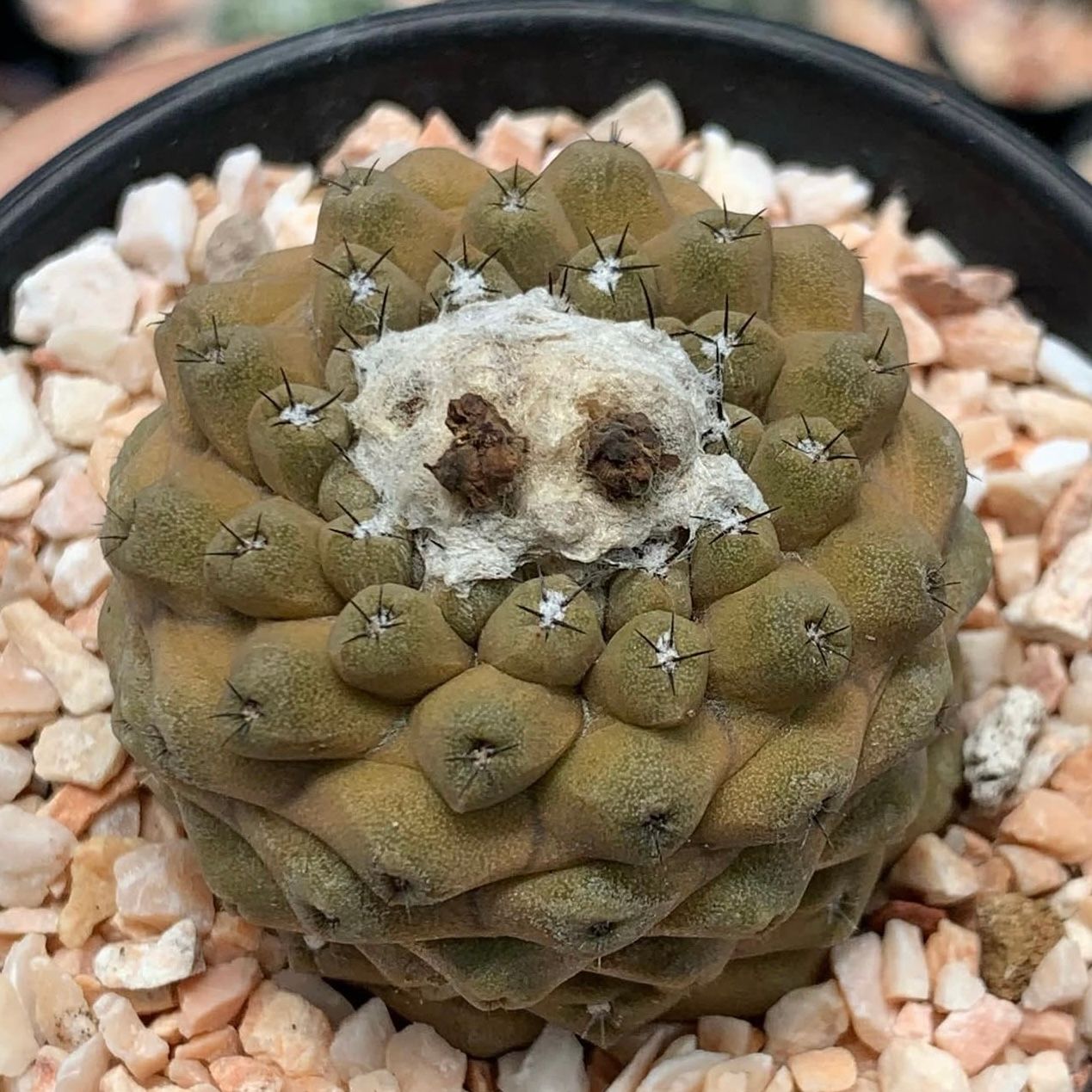
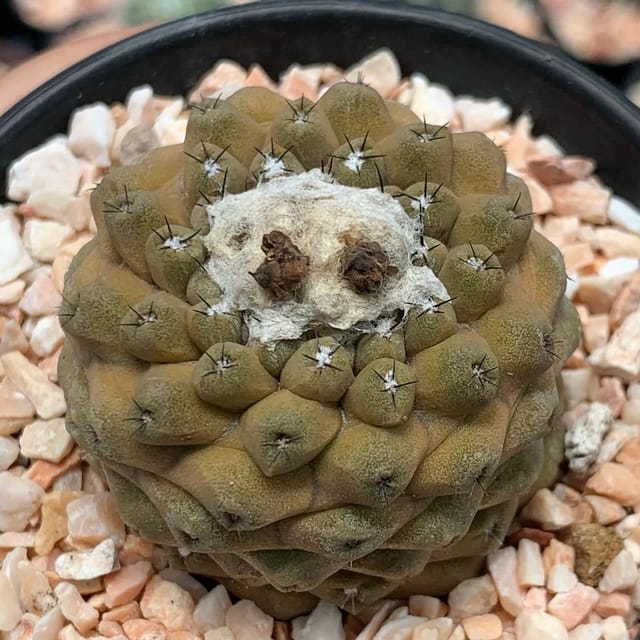
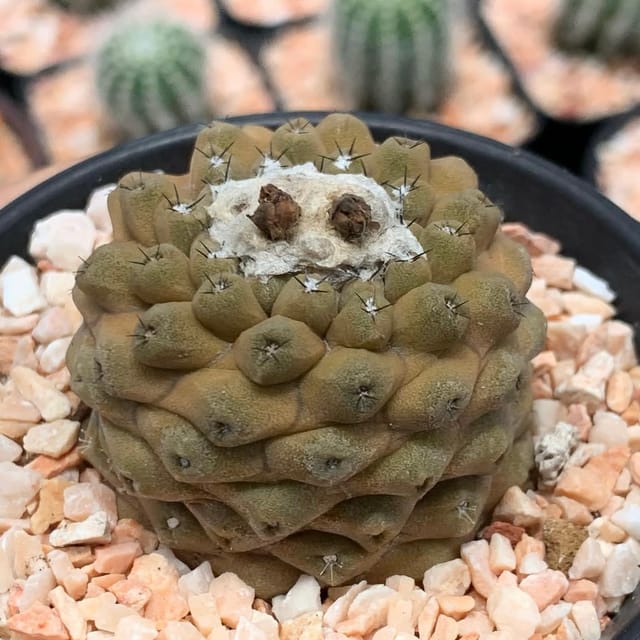
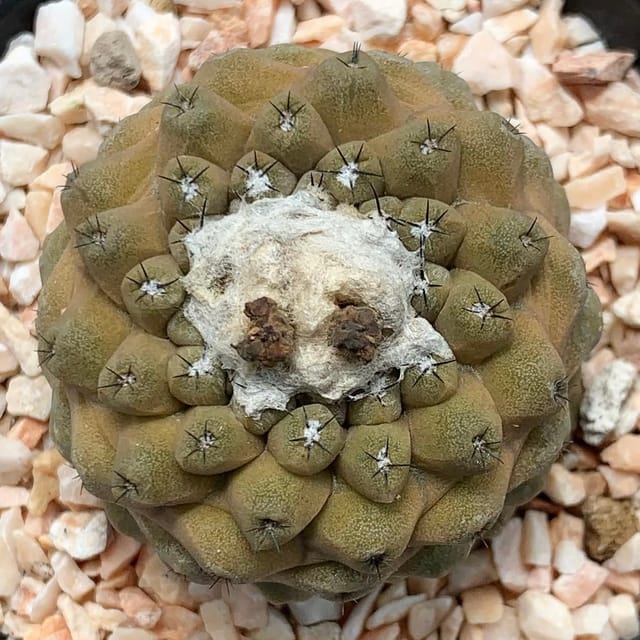
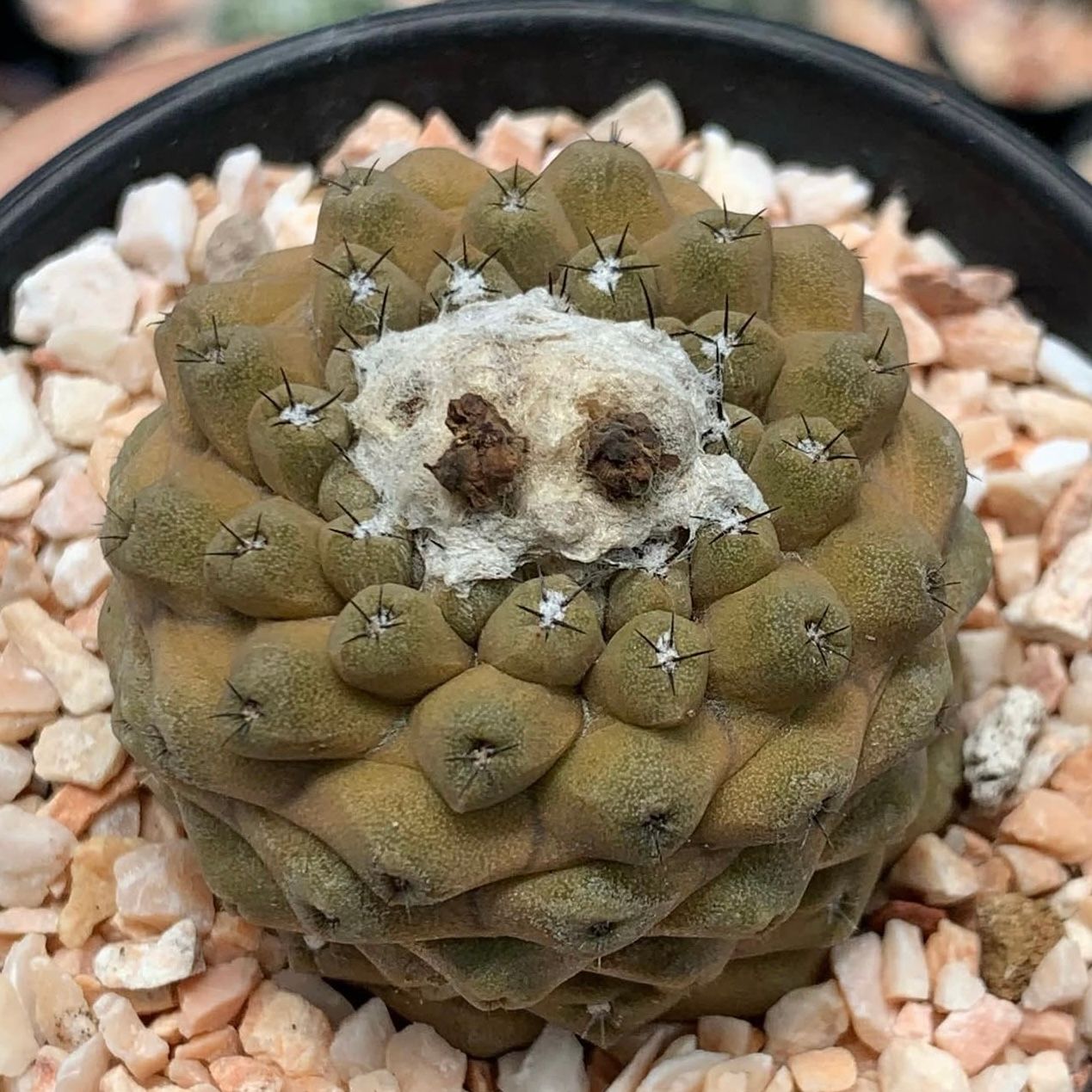
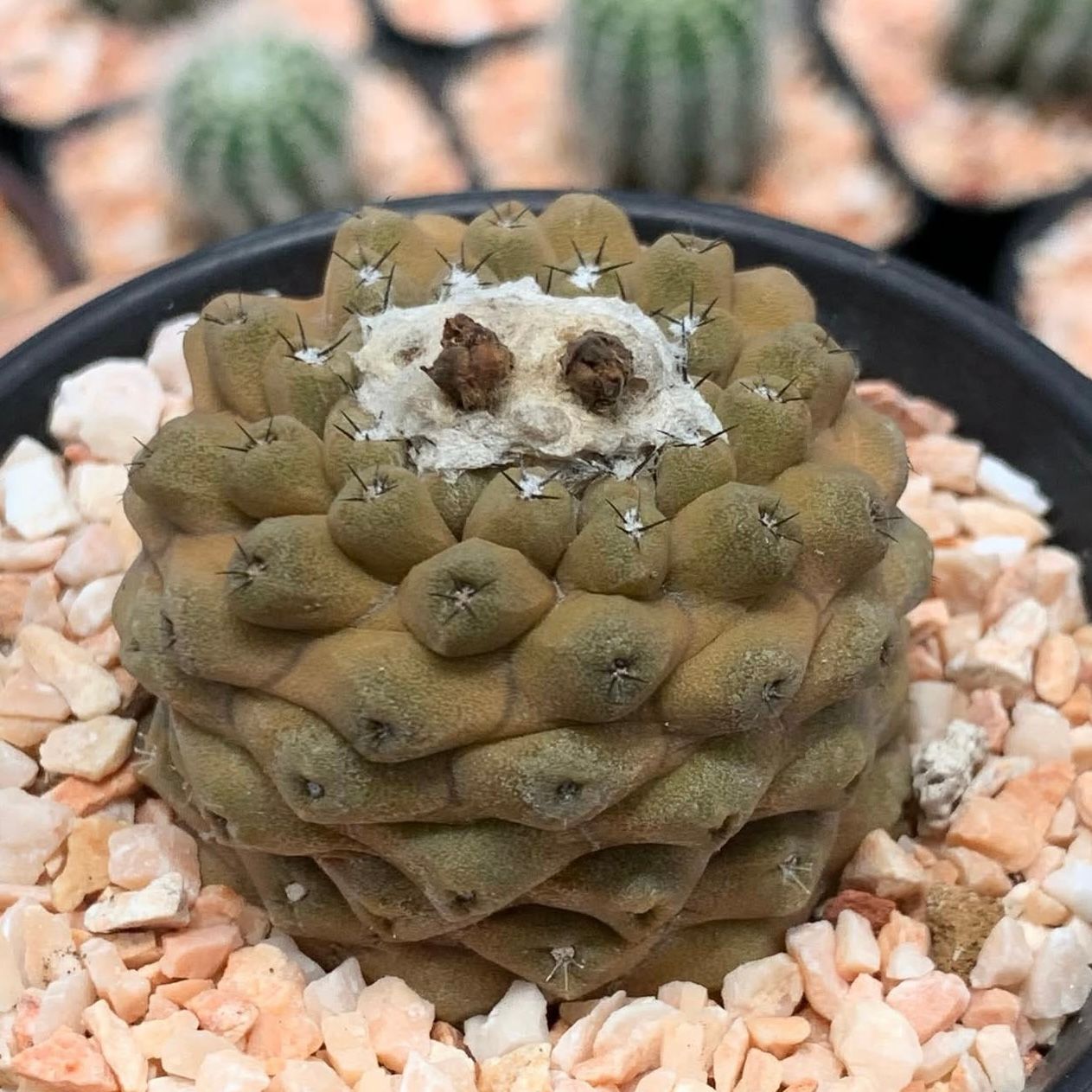
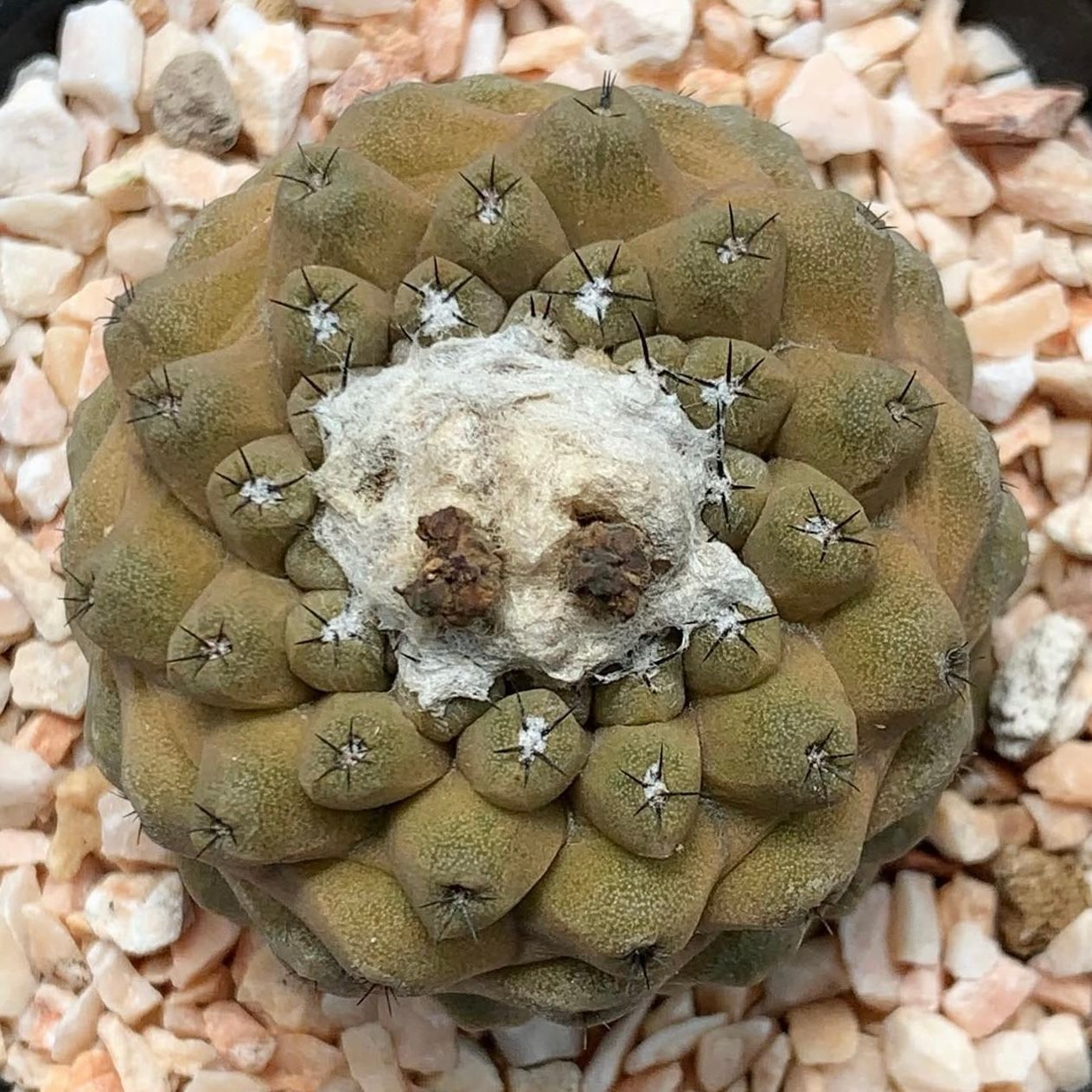
Copiapoa hypogaea is a fascinating choice, often nicknamed the "Underground Copiapoa" or "Lizard Skin" cactus. It is native to the coastal deserts of northern Chile, specifically near Chañaral in the Atacama Desert.
Here is a breakdown of what makes this species unique:
Key Characteristics
• Geophytic Growth: In the wild, this cactus grows almost entirely flush with the ground or slightly submerged. The name hypogaea literally means "underground."
• Distinctive Skin: The epidermis has a leathery, bronze-to-greyish-brown texture that resembles reptile skin. It usually lacks the heavy white farina (wax) found on other Copiapoa species.
• Size and Shape: It is a small, globose cactus, usually reaching about 3–4 cm in diameter. While it starts solitary, it can eventually form small clusters or clumps.
• Flowers: It produces yellow, funnel-shaped flowers from the apex (top), which are surprisingly large compared to the body of the plant.
Cultivation Tips
If you are adding this to a collection, it has some specific needs to mimic its harsh desert home:
• Mineral Substrate: It requires a very gritty, fast-draining soil mix with high mineral content (pumice, lava rock, or coarse sand) and very little organic matter to prevent rot.
• Watering: It should be watered sparingly. In the wild, these plants survive primarily on coastal fog. During the growing season (spring/summer), water only when the soil is completely dry. Keep it dry in the winter.
• Light: It appreciates bright, filtered light. While it loves sun, a sudden move to intense, direct afternoon sun can scorch the dark skin.
• Taproot: Like many desert specialists, it develops a thick, tuberous taproot. Because of this, it often does better in a slightly deeper pot than its top-side size would suggest.
Popular Cultivars
There are a few variations often sought after by collectors:
1. 'Lizard Skin': A specific cultivar selected for its particularly bumpy, textured epidermis.
2. var. barquitensis: Known for being a bit more globose and having slightly different spination.