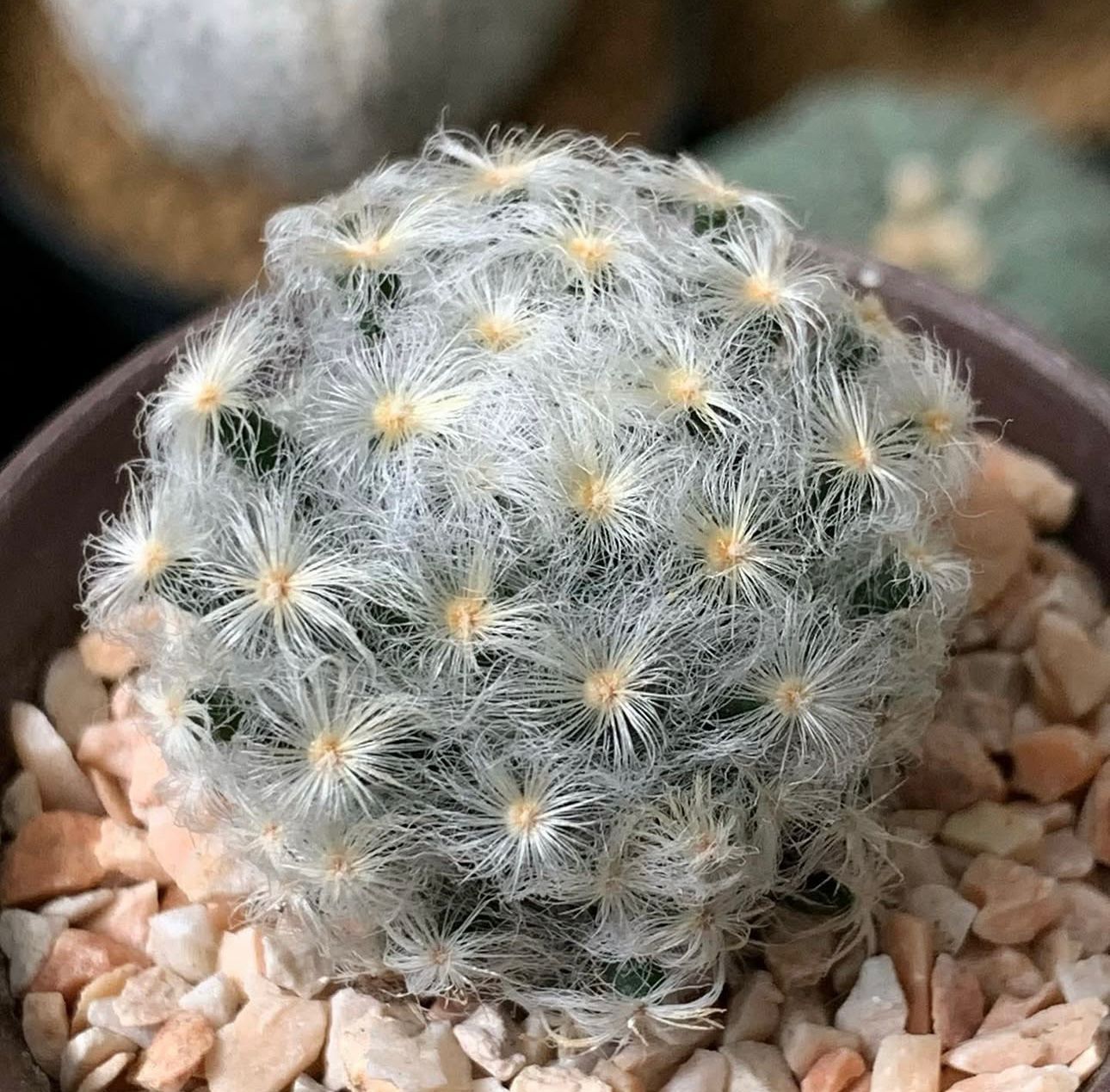
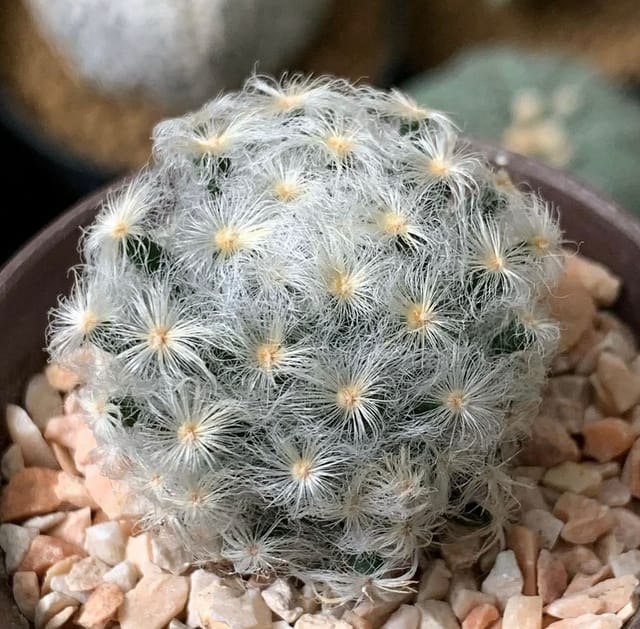
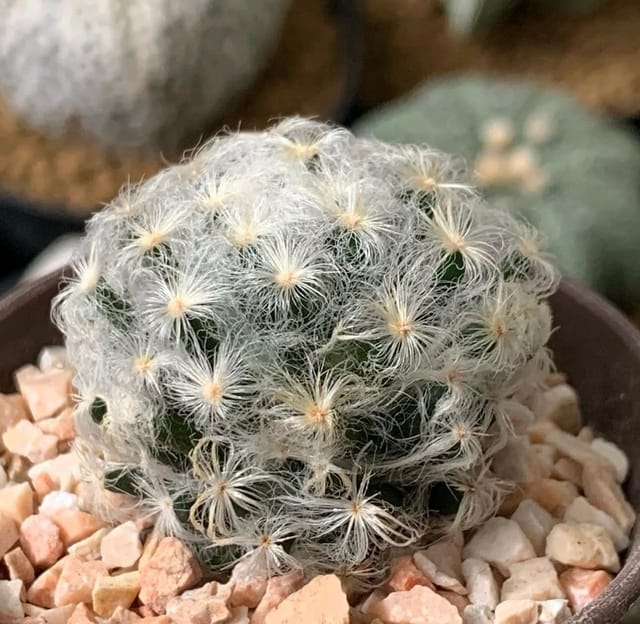
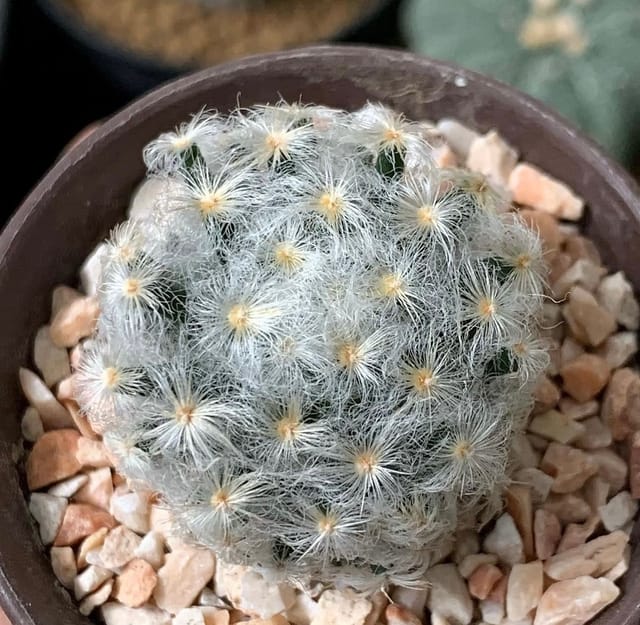
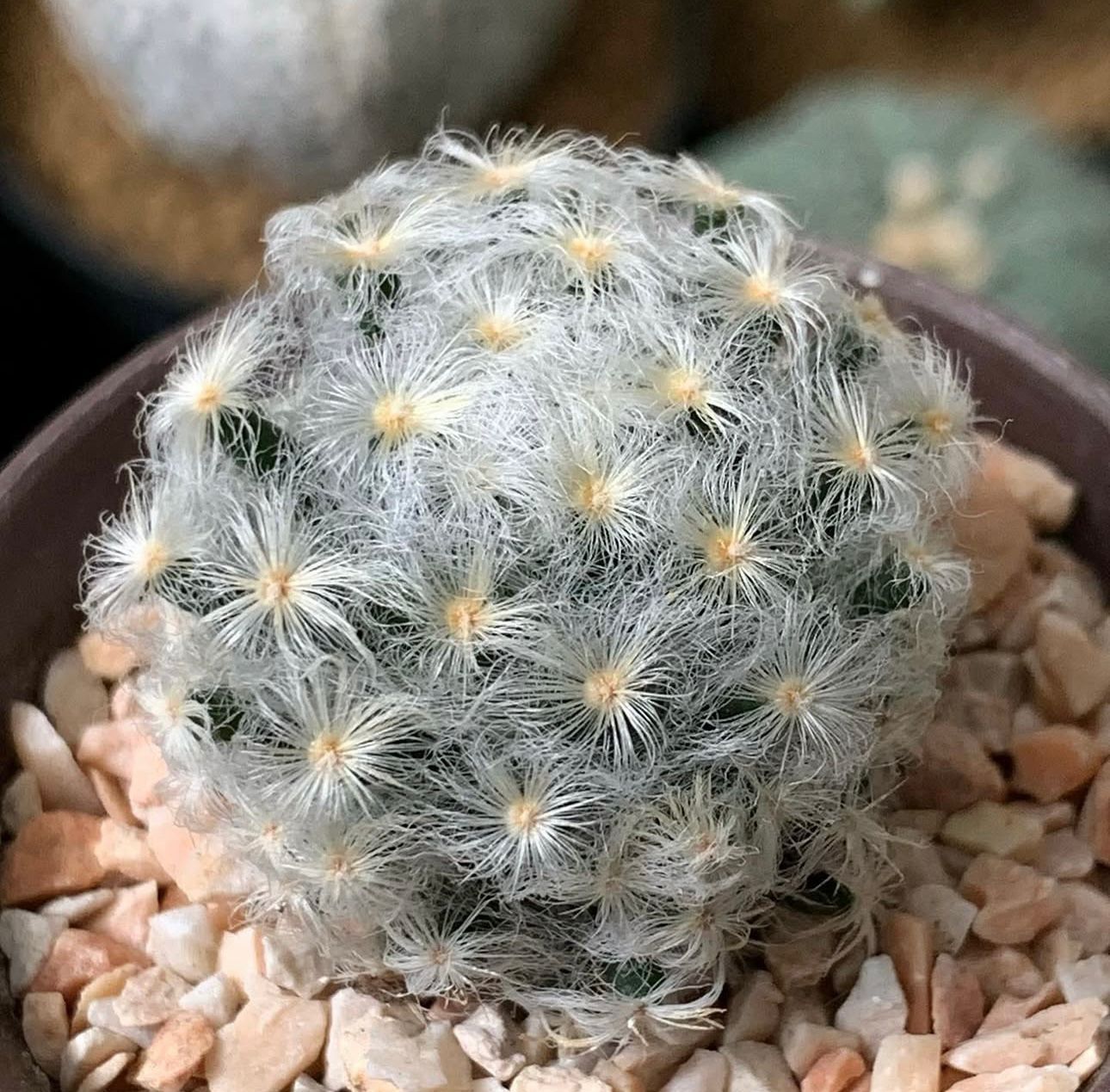
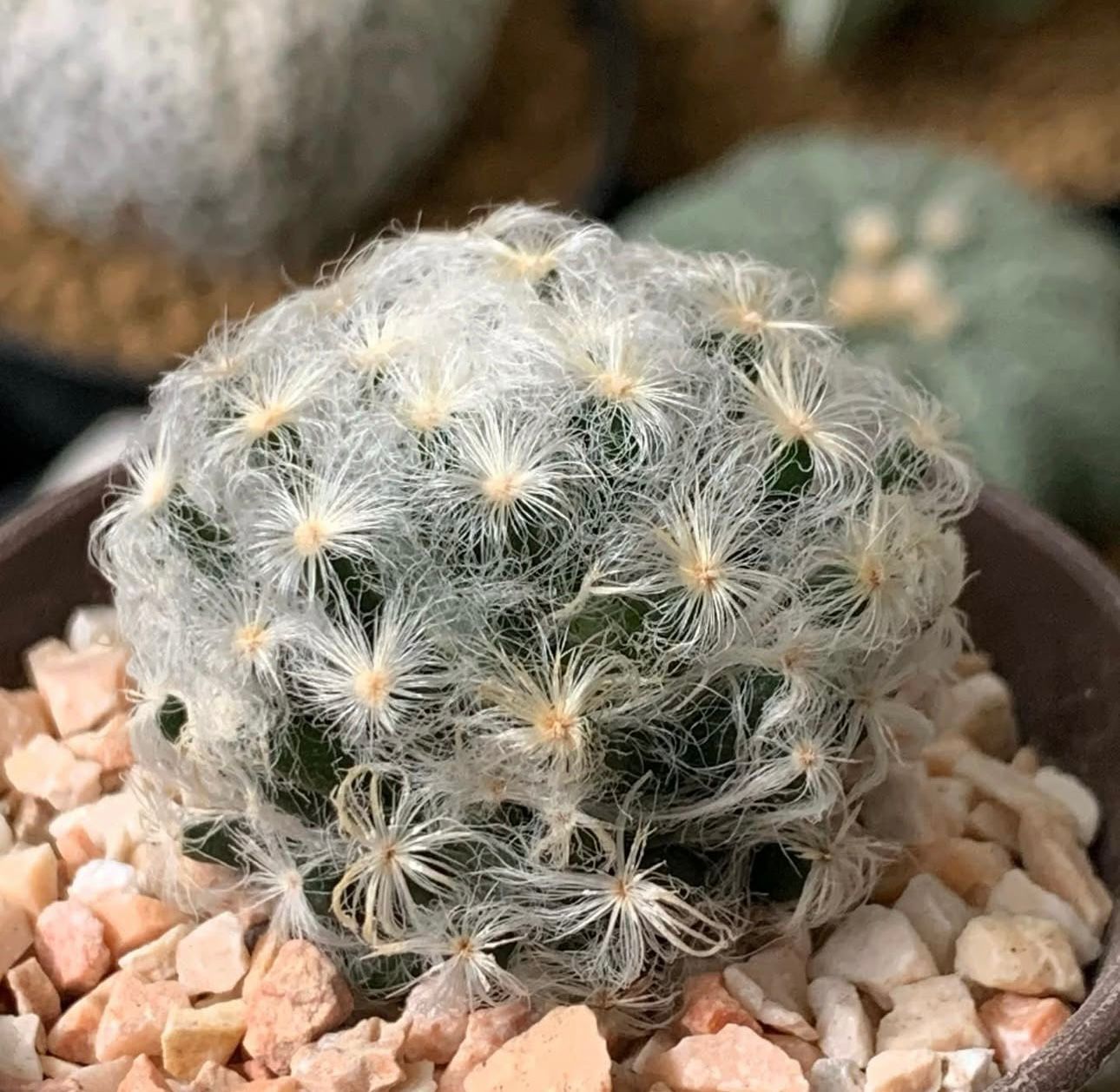
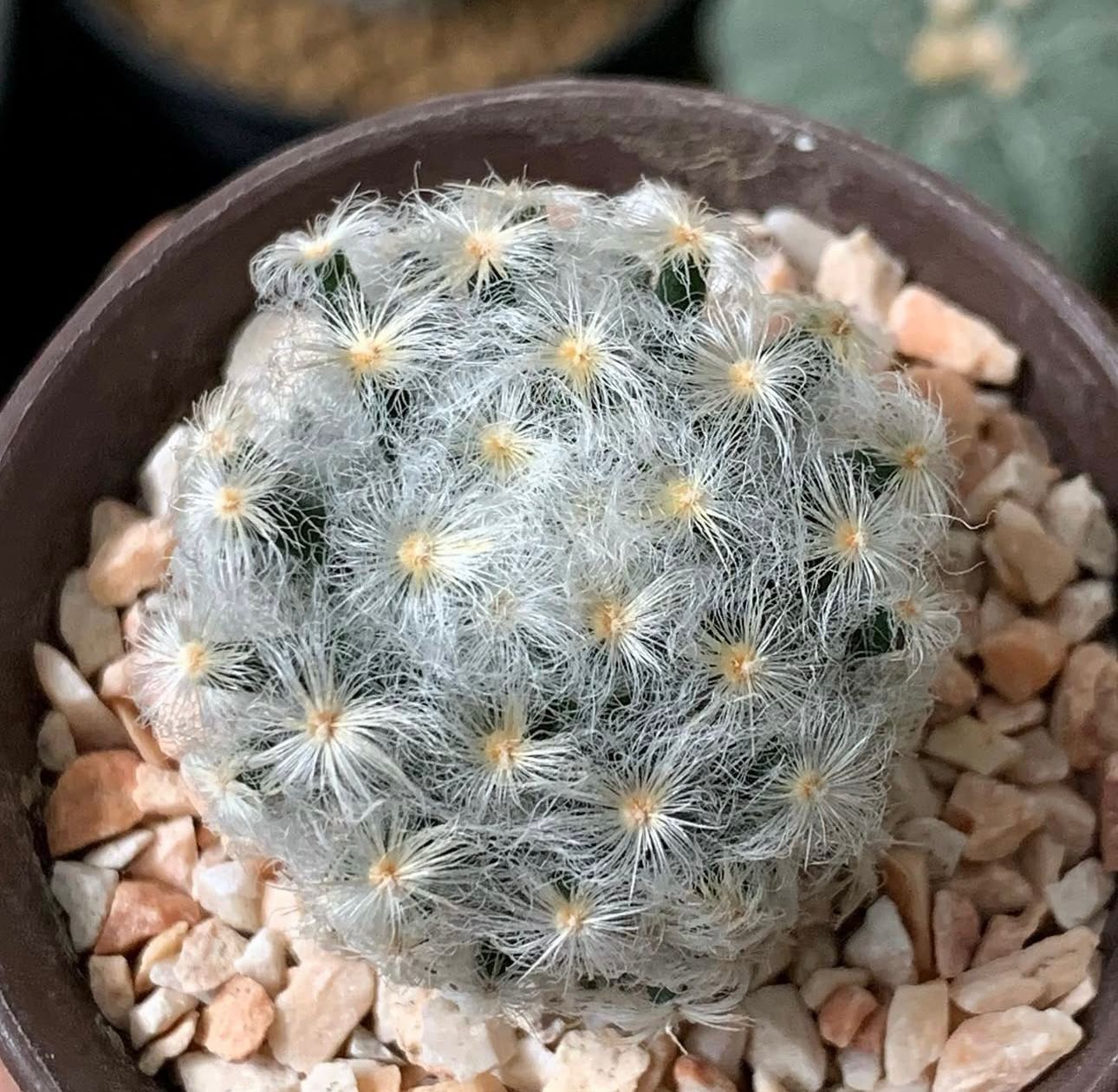
The Mammillaria plumosa, commonly known as the Feather Cactus, is the ultimate "deceptive" plant. While it looks like a pile of soft, fluffy white cotton balls or a cluster of bird feathers, those "feathers" are actually highly evolved spines.
Native to the limestone cliffs of northeastern Mexico, this cactus has traded the typical "scary needle" look for a sophisticated camouflage that protects it from the intense high-altitude sun.
Why is it "Feathery"?
The white fluff isn't just for show. Each areole produces spines that are deeply dissected into fine, hair-like filaments. This serves three vital survival functions:
Sunscreen: The dense white covering reflects UV rays, keeping the plant body cool.
Moisture Trapping: The "feathers" trap a layer of humid air against the skin and can even collect dew from the air.
Camouflage: In its native habitat, it blends in perfectly with white limestone rocks to avoid being eaten.
Key Characteristics
Growth Habit: It forms low-growing, dense mounds. A mature specimen can eventually grow into a spectacular "cloud" of many small globes.
The Flowers: Interestingly, the flowers are quite subtle compared to the plant itself. They are usually creamy white to pale yellow, sometimes with a hint of pink or green, and they have a lovely, faint scent.
Bloom Time: Unlike many cacti that wait for summer, M. plumosa often blooms in late autumn and winter.
Key Tips for Success
Light: Provide bright, direct light or, for some, filtered sun. Insufficient light causes weak, thin growth (etiolation).
Watering: Allow soil to dry out completely between waterings. In summer, water every 10–20 days; reduce significantly in winter.
Soil & Drainage: Use a specialized, airy cactus potting mix (e.g., potting soil mixed with perlite or pumice).
Potting: Choose containers with drainage holes; terracotta is ideal as it dries out quickly.
Maintenance: Fertilize once a month during the growing season (spring/summer). If the plant becomes too sun-stressed (yellow/brown), provide 30-60% shade.









![Austrocylindropuntia subulata Plant [RAJ GARDEN PLANTS]](https://www.paudhewale.com/s/660a356584d1ac2391ae69de/6a0b0756054cc3ad7e3fd111/blob-0ac8f51-640x640.png "Austrocylindropuntia subulata Plant [RAJ GARDEN PLANTS]")