

Be the first to review this product
HomePlantsIndoor PlantsIndoor Plants For GiftingLucky Bamboo, Money Plant & Spider Plant | A Table-top Combo with pots - UgaoGhar
52% OFF
Plants With PotsSold by Ugaoghar
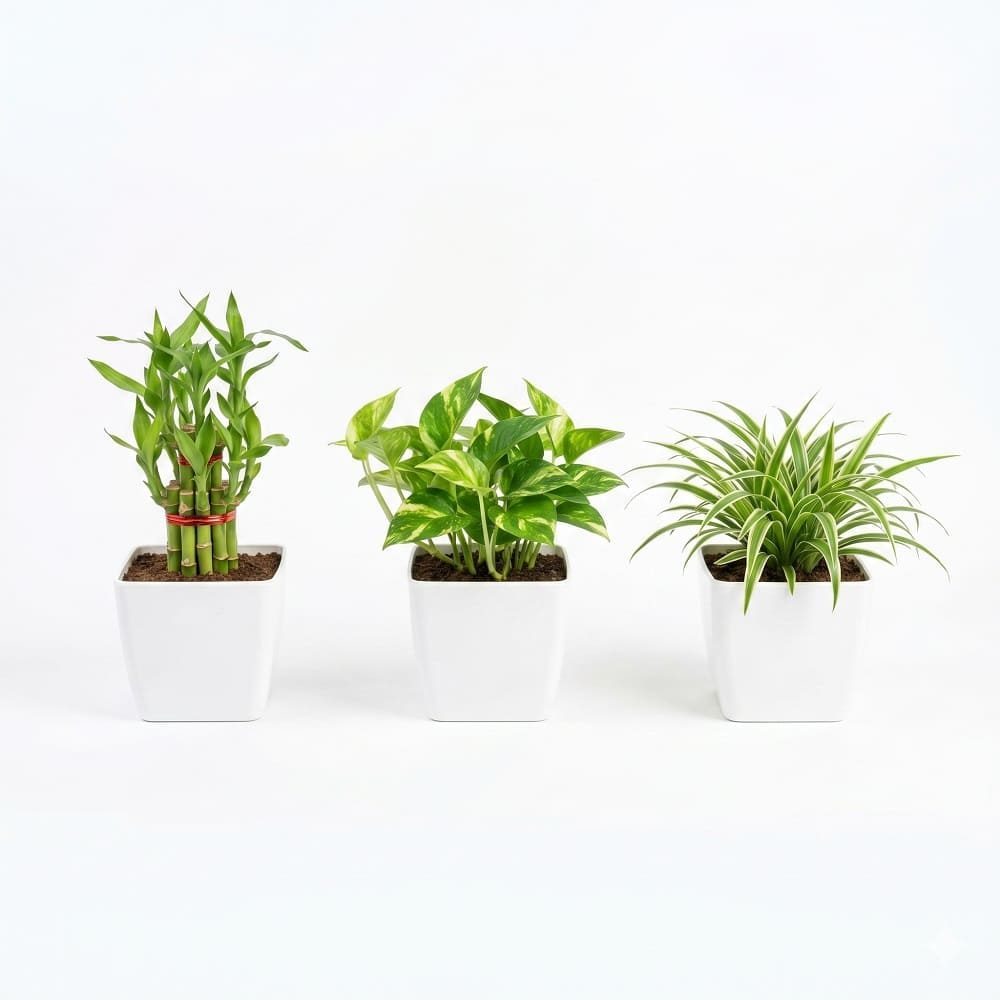
Lucky Bamboo, Money Plant & Spider Plant | A Table-top Combo with pots – Ugaoghar
🎉 Save ₹26052% OFF
₹239MRP ₹49952% offincl. of all taxes
Inclusive of all taxes
Verified nursery
🌿Refund/replacement Guidelines
🌿
After a Long Journey: Live plants shipped from far away can lose a few leaves or look tired on arrival. Most recover within a few days of watering and shade.
🚫
No Claims After Repotting: If a plant is transferred to another pot and gets damaged, no claims will be accepted. Re-potting is at your own risk.
📸
Unboxing Video Required: To claim a refund or replacement for any product, you must share an uncut unboxing video upon receiving the item.
⏳
Raise a Claim Within 5 Days: To be eligible for any refund/replacement, raise a claim from "My Orders" within 5 days of delivery — same window for every category.
About this Product
Lucky Bamboo (Dracaena sanderiana) Product Overview Lucky Bamboo, botanically classified as Dracaena sanderiana , is a perennial herb native to Central Africa. Despite its common name, it is a member of the asparagus family and…
Lucky Bamboo (Dracaena sanderiana)
Product Overview
Lucky Bamboo, botanically classified as Dracaena sanderiana, is a perennial herb native to Central Africa. Despite its common name, it is a member of the asparagus family and not a true bamboo. It features slender, upright stalks topped with lance-shaped green leaves. It is highly sought after for its incredible adaptability, as it can grow seamlessly either in clean water or in soil. It is often trained into architectural shapes like braids, twists, or tiers, making it a popular choice for tabletops, desks, and low-maintenance indoor styling.
Care Guide
-
Light: Prefers moderate to bright, indirect sunlight. Direct sunlight will scorch the leaves, while low-light conditions can cause the foliage to pale and slow down growth significantly.
-
Watering (Water Culture): If grown in water, keep the roots fully submerged. Change the water completely every 7 to 10 days to prevent algae growth and stagnation. Lucky Bamboo is highly sensitive to chlorine and fluoride present in tap water; use filtered, distilled, or rainwater to avoid leaf tip yellowing.
-
Watering (Soil Culture): If planted in soil, keep the medium slightly damp but never soggy. Water when the top inch of the soil feels dry.
Money Plant / Pothos (Epipremnum aureum)
Product Overview
The Money Plant, scientifically known as Epipremnum aureum and commonly referred to as Golden Pothos or Devil's Ivy, is a robust evergreen vine native to French Polynesia. It is characterized by heart-shaped, glossy leaves that often feature marbled variegation of green, yellow, or cream. As an adaptable trailing plant, its vines can cascade beautifully over hanging baskets, shelves, or climb upwards if trained along a moss pole or trellis. It is widely recognized as one of the most resilient and forgiving indoor plants for beginners.
Care Guide
-
Light: Extremely versatile; thrives in bright, indirect light but adapts well to low-light indoor spaces. Note that variegated varieties may lose their lighter patterns and turn solid green if light levels are too low. Avoid direct sunlight, which bleaches the foliage.
-
Watering: Allow the top 2 inches of soil to dry out completely between watering sessions. Squeeze a leaf gently—if it feels soft or limp, the plant is ready for water. Avoid overwatering, as the roots are highly susceptible to decay in waterlogged soil.
-
Soil & Drainage: Grows best in a standard, well-draining potting mix. Ensure the container has efficient drainage holes at the base to let excess water escape freely.
Spider Plant (Chlorophytum comosum)
Product Overview
The Spider Plant, botanically known as Chlorophytum comosum, is a popular perennial flowering herb native to southern Africa. It is easily identified by its long, narrow, ribbon-like leaves that grow from a central rosette in a graceful, fountain-like cascade. The foliage can be solid green or beautifully variegated with white or cream stripes along the margins or center. Mature, healthy plants produce long, wiry stems that bear small white flowers, which eventually develop into tiny plantlets called "spiderettes." These dangling offshoots make it an excellent ornamental choice for hanging baskets, high shelves, and plant pedestals.
Care Guide
-
Light: Thrives best in bright, indirect sunlight. While it is highly adaptable and can survive in lower-light indoor spaces, sufficient light is necessary to maintain sharp color variegation and to stimulate the production of flowering runners and offshoots. Avoid direct afternoon sun, which can easily bleach or burn the grass-like leaves.
-
Watering: Prefers an even moisture level but tolerates brief periods of drought due to its thick, fleshy tuberous roots that store water. Water thoroughly when the top inch of soil feels dry. To prevent leaf tip browning, it is recommended to use filtered water, rainwater, or distilled water, as the plant is highly sensitive to the fluoride and chlorine commonly found in municipal tap water.
-
Soil & Drainage: Requires a loose, lightweight, and well-draining potting medium. Standard all-purpose potting soil amended with perlite or coarse sand ensures that moisture is retained without the roots sitting in stagnant water. Ensure the pot has proper drainage holes to avoid root rot.
-
Maintenance & Repotting: Trim any brown leaf tips following the natural angle of the leaf with clean shears. The plant prefers to be slightly root-bound to produce its signature hanging offshoots. Repot into a slightly larger container once the extensive root system fills the current pot or begins pushing soil toward the surface.
Details on this page are shared by Ugaoghar. We check every listing, but please look at the photos and description carefully before you buy — and if something's wrong, use "Report incorrect info" so it gets fixed.
Product Specifications
| Category | Plants With Pots |
| Damage & returns | Something wrong with your order? Report it within 5 days of delivery with an uncut unboxing video. You don't need to send anything back. |
Customer Reviews
₹239₹499