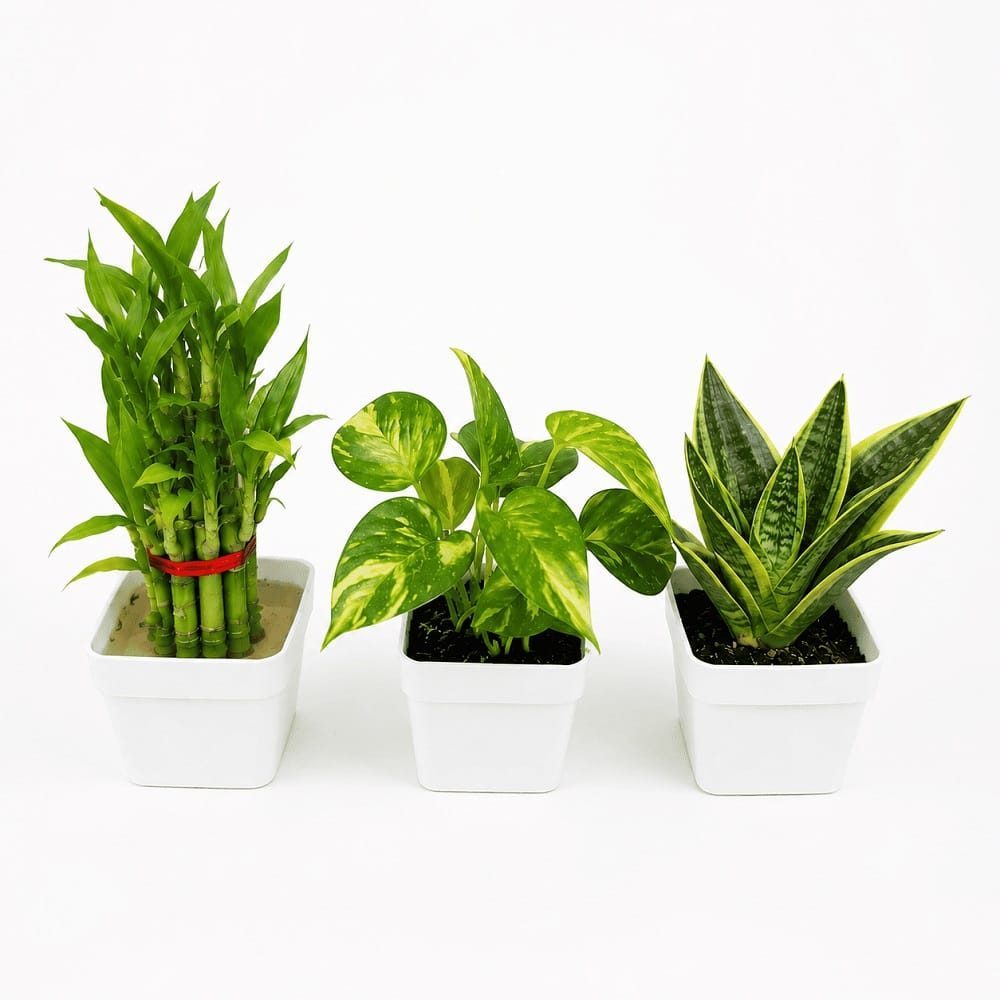
Lucky Bamboo (Dracaena sanderiana) Product Overview Lucky Bamboo, botanically classified as Dracaena sanderiana , is a perennial herb native to Central Africa. Despite its common name, it is a member of the asparagus family and…
Lucky Bamboo (Dracaena sanderiana)
Product Overview
Lucky Bamboo, botanically classified as Dracaena sanderiana, is a perennial herb native to Central Africa. Despite its common name, it is a member of the asparagus family and not a true bamboo. It features slender, upright stalks topped with lance-shaped green leaves. It is highly sought after for its incredible adaptability, as it can grow seamlessly either in clean water or in soil. It is often trained into architectural shapes like braids, twists, or tiers, making it a popular choice for tabletops, desks, and low-maintenance indoor styling.
Care Guide
-
Light: Prefers moderate to bright, indirect sunlight. Direct sunlight will scorch the leaves, while low-light conditions can cause the foliage to pale and slow down growth significantly.
-
Watering (Water Culture): If grown in water, keep the roots fully submerged. Change the water completely every 7 to 10 days to prevent algae growth and stagnation. Lucky Bamboo is highly sensitive to chlorine and fluoride present in tap water; use filtered, distilled, or rainwater to avoid leaf tip yellowing.
-
Watering (Soil Culture): If planted in soil, keep the medium slightly damp but never soggy. Water when the top inch of the soil feels dry.
Money Plant / Pothos (Epipremnum aureum)
Product Overview
The Money Plant, scientifically known as Epipremnum aureum and commonly referred to as Golden Pothos or Devil's Ivy, is a robust evergreen vine native to French Polynesia. It is characterized by heart-shaped, glossy leaves that often feature marbled variegation of green, yellow, or cream. As an adaptable trailing plant, its vines can cascade beautifully over hanging baskets, shelves, or climb upwards if trained along a moss pole or trellis. It is widely recognized as one of the most resilient and forgiving indoor plants for beginners.
Care Guide
-
Light: Extremely versatile; thrives in bright, indirect light but adapts well to low-light indoor spaces. Note that variegated varieties may lose their lighter patterns and turn solid green if light levels are too low. Avoid direct sunlight, which bleaches the foliage.
-
Watering: Allow the top 2 inches of soil to dry out completely between watering sessions. Squeeze a leaf gently—if it feels soft or limp, the plant is ready for water. Avoid overwatering, as the roots are highly susceptible to decay in waterlogged soil.
-
Soil & Drainage: Grows best in a standard, well-draining potting mix. Ensure the container has efficient drainage holes at the base to let excess water escape freely.
Snake Plant (Dracaena trifasciata)
Product Overview
The Snake Plant, botanically known as Dracaena trifasciata (formerly Sansevieria trifasciata), is a highly resilient evergreen succulent perennial native to tropical West Africa. It is easily recognized by its stiff, vertical, sword-shaped leaves that grow in an architectural rosette formation. The thick, leathery leaves feature a deep green coloration patterned with lighter gray-green horizontal bands. Because of its structural upright posture and exceptional tolerance for neglect, it serves as an excellent low-maintenance statement piece for modern home interiors, offices, narrow corners, and tabletops.
Care Guide
-
Light: Remarkably adaptable to nearly any interior environment. It performs best in bright, indirect sunlight but easily tolerates low-light rooms, dark corners, and office spaces relying entirely on artificial fluorescent lighting. Keep out of harsh, direct afternoon sun to avoid leaf bleaching or scorching.
-
Watering: Requires very minimal water due to its excellent drought-resistance and water-storing leaves. Follow a strict "soak and dry" routine: water thoroughly only when the potting soil has dried out completely. Reduce watering significantly during the cooler winter months. Overwatering or letting the root system sit in stagnant, waterlogged soil is the primary cause of root decay.
-
Soil & Drainage: Sharp, immediate drainage is vital. Use a loose, porous, and gritty potting mixture specifically formulated for cacti and succulents, or mix standard potting soil with generous amounts of perlite and coarse sand. Always use a container equipped with open drainage holes at the bottom.