
![Adenium Grafted Rimjhim Flower Live Plant [RAJ GARDEN PLANTS]](https://www.paudhewale.com/s/660a356584d1ac2391ae69de/6a0b0a0c921035dc2b8bd87a/61_original-640x640.jpg "Adenium Grafted Rimjhim Flower Live Plant [RAJ GARDEN PLANTS]")
₹1,001₹260
![Madhumati, Combretum indicum, Madhuvi lota, ModhumonjoriMalati, Madhumaloti, Akar Dani, Radha Manoharam Live Plant [RAJ GARDEN PLANTS]](https://www.paudhewale.com/s/660a356584d1ac2391ae69de/6a0b09b629066cbeeb4baf7b/madhumalti-640x640.jpg "Madhumati, Combretum indicum, Madhuvi lota, ModhumonjoriMalati, Madhumaloti, Akar Dani, Radha Manoharam Live Plant [RAJ GARDEN PLANTS]")
₹1,001₹258
![Safed Aak Seeds (Pack of 50 Seeds), Calotropis gigantea Plant Seeds, Aakda Seeds, Aak Plant Seeds [RAJ GARDEN PLANTS]](https://www.paudhewale.com/s/660a356584d1ac2391ae69de/6a0b098229066cbeeb4bae9e/78_original-640x640.jpg "Safed Aak Seeds (Pack of 50 Seeds), Calotropis gigantea Plant Seeds, Aakda Seeds, Aak Plant Seeds [RAJ GARDEN PLANTS]")
₹1,001₹258
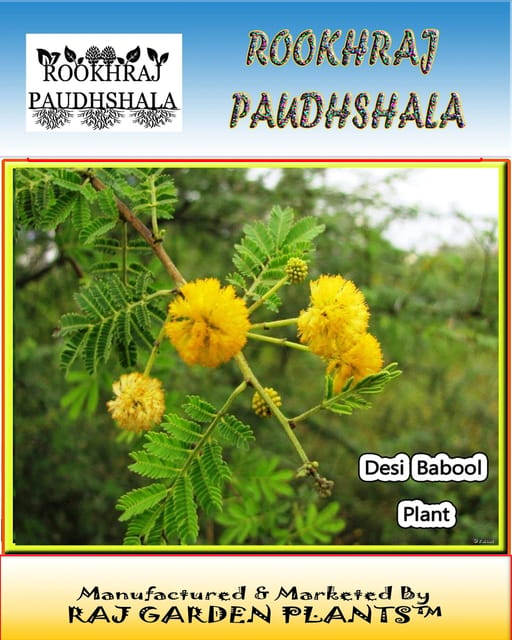
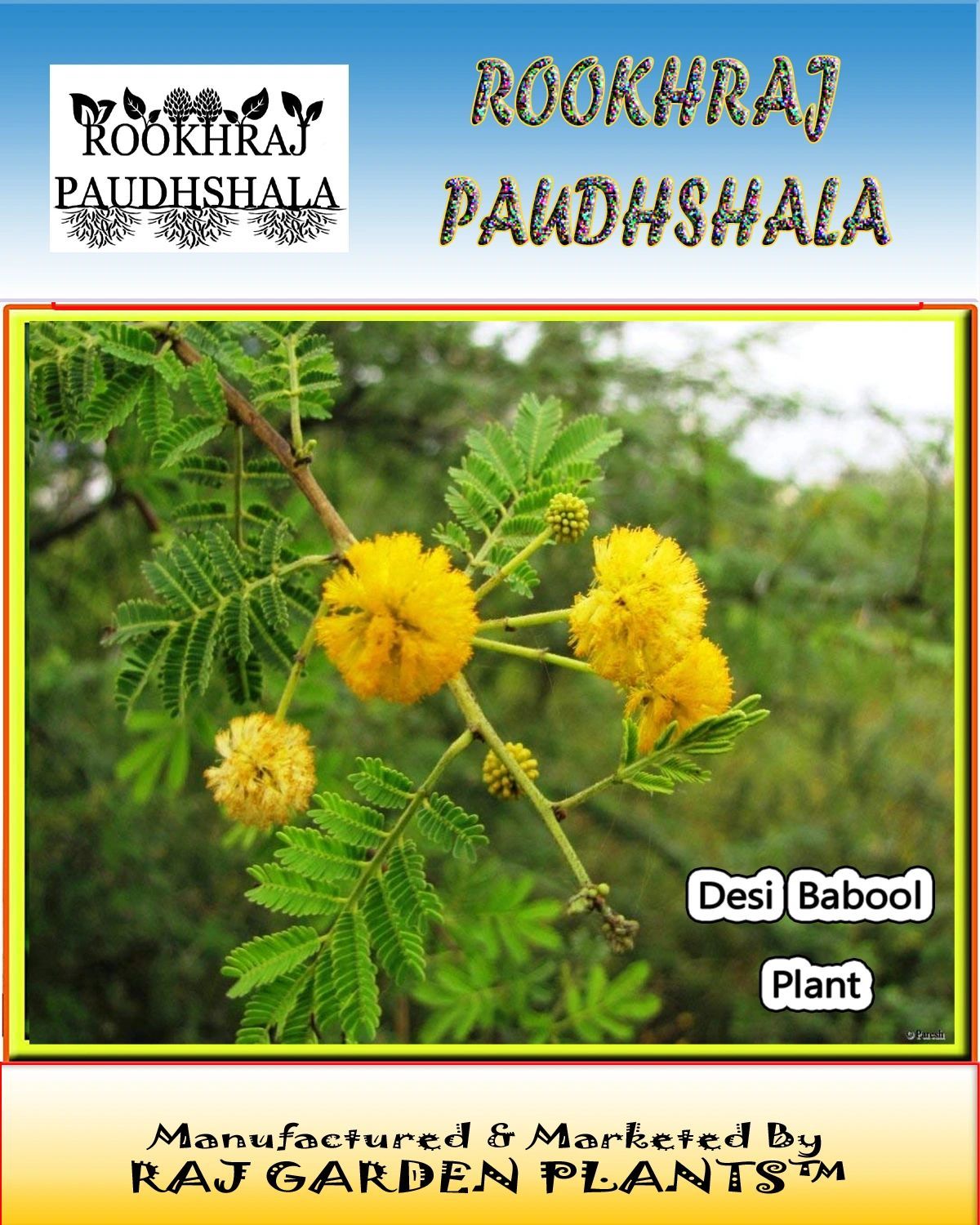
![Desi Babool,देसी बबूल Acacia nilotica Live Plant [RAJ GARDEN PLANTS]](https://www.paudhewale.com/s/660a356584d1ac2391ae69de/6a0b08708195e488a2de2afd/desipercent20babool.jpg)
This is a sapling / live plant of ROOKHRAJ PAUDHSHALA Desi Babool,देसी बबूल Acacia nilotica Live Plant Desi Babool, scientifically known as Acacia nilotica, is a sturdy and versatile tree native to various regions of Africa, Asia, and the Middle East. Also referred to as Indian Gum Arabic Tree, it belongs to the Fabaceae family and plays a significant role in traditional practices and ecosystem services. The tree features distinctive bipinnate leaves with small leaflets and produces fragrant yellow flowers that later develop into pods. Desi Babool is valued for its multiple uses, including medicinal, environmental, and cultural applications. Its bark, leaves, and pods are utilized in traditional medicine for treating various ailments such as diarrhea, dysentery, and skin issues. The pods of the Desi Babool tree contain gum Arabic, a natural substance used in food, pharmaceuticals, and other industrial products. As a nitrogen-fixing tree, Desi Babool improves soil fertility by enriching it with nitrogen, benefiting nearby plants and ecosystems. The tree is well-suited for reforestation, erosion control, and land rehabilitation due to its adaptability to arid and semi-arid conditions. Desi Babool wood is used for construction, furniture, and fuel, making it a valuable resource for local communities. The tree provides habitat and food for various wildlife, contributing to biodiversity and ecosystem balance. It has cultural significance in various regions, being associated with festivals, rituals, and traditional practices. Desi Babool's ability to thrive in challenging environments makes it an important component of sustainable land management and conservation efforts. Proper care and maintenance can promote healthy growth and enhance the ecological and socio-economic benefits of the Desi Babool tree. Growing and Care Tips for Acacia nilotica (Desi Babool): Climate and Location: Acacia nilotica thrives in hot and arid to semi-arid climates. Choose a well-draining location with plenty of sunlight for optimal growth. Soil Preparation: Prepare the planting site with well-draining soil that is slightly acidic to neutral in pH. Improve soil structure by adding organic matter like compost. Planting: Plant Acacia nilotica seeds or seedlings during the warmer months. Dig a hole slightly larger than the root ball and place the plant in the hole, making sure it is at the same level as it was in the nursery container. Backfill the hole with soil, tamp it down gently, and water thoroughly. Watering: Provide regular watering during the establishment phase (first year) to help the plant develop a strong root system. Once established, reduce the frequency of watering, as Acacia nilotica is drought-tolerant. Mulching: Apply a layer of organic mulch around the base of the plant to retain soil moisture, regulate temperature, and suppress weed growth. Pruning: Prune Acacia nilotica to remove any dead, diseased, or overcrowded branches. Regular pruning can help shape the tree and promote healthy growth. Fertilization: Acacia nilotica generally grows well in nutrient-poor soils, so avoid excessive fertilization. If needed, provide a balanced, slow-release fertilizer during the growing season. Protection from Extreme Conditions: Young plants may benefit from protection against strong winds and frost until they establish a strong root system. Pest and Disease Management: Monitor for pests such as aphids, caterpillars, or leaf-eating insects. Address any pest issues promptly using appropriate methods. Reforestation and Erosion Control: Acacia nilotica is excellent for reforestation and erosion control efforts. Plant it on degraded lands to improve soil structure and prevent soil erosion. Wildlife Habitat: Recognize the role of Acacia nilotica in providing habitat and food for various wildlife species. Contribute to local biodiversity and ecosystem balance by planting and caring for this tree. Cultural and Traditional Uses: Respect and appreciate the cultural significance of Acacia nilotica in different regions and its traditional uses. Learn about its role in local rituals, festivals, and practices. By following these growing and care tips, you can successfully cultivate Acacia nilotica, contributing to environmental conservation, sustainable land management, and the preservation of its ecological and cultural importance. Shipping Information Shipping will be done within maximum 30 days of payment confirmation. Cash on delivery not available for this plant. Share payment details via email. Payment may subject to realisation and confirmation. Handling in transit is beyond our control, so if any issue or error appears with the plant on time of delivery , kindly email us with clear photographs and video of unboxing and opening parcel. You can have one time replacement without no additional cost in case of plant is dried on time of delivery. you have to share bank details via email for refund of order value. Plants are sold and shipped accordingly climatic conditions, available stock and conditions of plants which may affect sudden change of weather ,temperature and rain fall.
XN-RKH-PDH-DSChoose your location
Please provide your delivery pincode to see products available in your area
COD (Cash On Delivery) On request
🎁Gift Coupons: Share your unboxing video & receive an exclusive gift coupon as a thank-you!
Share here
🚫No Claims After Repotting: If a plant is transferred to another pot and gets damaged, no claims will be accepted. Re-potting is at your own risk.
📸Unboxing Video Required: To claim a refund or replacement for any product, you must share an uncut unboxing video upon receiving the item.
⏳Raise Claim Within 24 Hours: To be eligible for any refund/replacement, raise a claim within 24 hours of delivery.(For plants only, for other categories the claim window is 5 days)
| brand | Raj Garden Plants |
This is a sapling / live plant of ROOKHRAJ PAUDHSHALA Desi Babool,देसी बबूल Acacia nilotica Live Plant Desi Babool, scientifically known as Acacia nilotica, is a sturdy and versatile tree native to various regions of Africa, Asia, and the Middle East. Also referred to as Indian Gum Arabic Tree, it belongs to the Fabaceae family and plays a significant role in traditional practices and ecosystem services. The tree features distinctive bipinnate leaves with small leaflets and produces fragrant yellow flowers that later develop into pods. Desi Babool is valued for its multiple uses, including medicinal, environmental, and cultural applications. Its bark, leaves, and pods are utilized in traditional medicine for treating various ailments such as diarrhea, dysentery, and skin issues. The pods of the Desi Babool tree contain gum Arabic, a natural substance used in food, pharmaceuticals, and other industrial products. As a nitrogen-fixing tree, Desi Babool improves soil fertility by enriching it with nitrogen, benefiting nearby plants and ecosystems. The tree is well-suited for reforestation, erosion control, and land rehabilitation due to its adaptability to arid and semi-arid conditions. Desi Babool wood is used for construction, furniture, and fuel, making it a valuable resource for local communities. The tree provides habitat and food for various wildlife, contributing to biodiversity and ecosystem balance. It has cultural significance in various regions, being associated with festivals, rituals, and traditional practices. Desi Babool's ability to thrive in challenging environments makes it an important component of sustainable land management and conservation efforts. Proper care and maintenance can promote healthy growth and enhance the ecological and socio-economic benefits of the Desi Babool tree. Growing and Care Tips for Acacia nilotica (Desi Babool): Climate and Location: Acacia nilotica thrives in hot and arid to semi-arid climates. Choose a well-draining location with plenty of sunlight for optimal growth. Soil Preparation: Prepare the planting site with well-draining soil that is slightly acidic to neutral in pH. Improve soil structure by adding organic matter like compost. Planting: Plant Acacia nilotica seeds or seedlings during the warmer months. Dig a hole slightly larger than the root ball and place the plant in the hole, making sure it is at the same level as it was in the nursery container. Backfill the hole with soil, tamp it down gently, and water thoroughly. Watering: Provide regular watering during the establishment phase (first year) to help the plant develop a strong root system. Once established, reduce the frequency of watering, as Acacia nilotica is drought-tolerant. Mulching: Apply a layer of organic mulch around the base of the plant to retain soil moisture, regulate temperature, and suppress weed growth. Pruning: Prune Acacia nilotica to remove any dead, diseased, or overcrowded branches. Regular pruning can help shape the tree and promote healthy growth. Fertilization: Acacia nilotica generally grows well in nutrient-poor soils, so avoid excessive fertilization. If needed, provide a balanced, slow-release fertilizer during the growing season. Protection from Extreme Conditions: Young plants may benefit from protection against strong winds and frost until they establish a strong root system. Pest and Disease Management: Monitor for pests such as aphids, caterpillars, or leaf-eating insects. Address any pest issues promptly using appropriate methods. Reforestation and Erosion Control: Acacia nilotica is excellent for reforestation and erosion control efforts. Plant it on degraded lands to improve soil structure and prevent soil erosion. Wildlife Habitat: Recognize the role of Acacia nilotica in providing habitat and food for various wildlife species. Contribute to local biodiversity and ecosystem balance by planting and caring for this tree. Cultural and Traditional Uses: Respect and appreciate the cultural significance of Acacia nilotica in different regions and its traditional uses. Learn about its role in local rituals, festivals, and practices. By following these growing and care tips, you can successfully cultivate Acacia nilotica, contributing to environmental conservation, sustainable land management, and the preservation of its ecological and cultural importance. Shipping Information Shipping will be done within maximum 30 days of payment confirmation. Cash on delivery not available for this plant. Share payment details via email. Payment may subject to realisation and confirmation. Handling in transit is beyond our control, so if any issue or error appears with the plant on time of delivery , kindly email us with clear photographs and video of unboxing and opening parcel. You can have one time replacement without no additional cost in case of plant is dried on time of delivery. you have to share bank details via email for refund of order value. Plants are sold and shipped accordingly climatic conditions, available stock and conditions of plants which may affect sudden change of weather ,temperature and rain fall.
Products listed on Paudhewale.com are provided by individual sellers. We recommend referring to the product label before use. Paudhewale.com is not liable for any loss arising from misuse of products sold on our platform.
![Kaner Yellow Flower Plant , Indian oleander , Nerium indicum Live Plant [RAJ GARDEN PLANTS]](https://www.paudhewale.com/s/660a356584d1ac2391ae69de/6a0b0976affb47165e7b7237/kanerpercent20yellow-640x640.jpg "Kaner Yellow Flower Plant , Indian oleander , Nerium indicum Live Plant [RAJ GARDEN PLANTS]")
![Dalchini (दालचीनी) Live Plant, Cinnamomum Cassia Plant, Daalchini [RAJ GARDEN PLANTS]](https://www.paudhewale.com/s/660a356584d1ac2391ae69de/6a0b095e921035dc2b8bd00b/4_original-640x640.jpg "Dalchini (दालचीनी) Live Plant, Cinnamomum Cassia Plant, Daalchini [RAJ GARDEN PLANTS]")
![Red Rose Live Plant, Desi Gulab Live Plant [RAJ GARDEN PLANTS]](https://www.paudhewale.com/s/660a356584d1ac2391ae69de/6a0b0954affb47165e7b7031/6_original-640x640.jpg "Red Rose Live Plant, Desi Gulab Live Plant [RAJ GARDEN PLANTS]")
![Chirmi Live Plant, Abrus precatorius, चिरमी [RAJ GARDEN PLANTS]](https://www.paudhewale.com/s/660a356584d1ac2391ae69de/6a0b092a8195e488a2de337d/18_original-640x640.jpg "Chirmi Live Plant, Abrus precatorius, चिरमी [RAJ GARDEN PLANTS]")
![Asparagus Densiflorus ‘Meyeri’ Plant [RAJ GARDEN PLANTS]](http://cdn.storehippo.com/s/6273386e9744993653600c71/ms.files/no_image.svg "Asparagus Densiflorus ‘Meyeri’ Plant [RAJ GARDEN PLANTS]")
![Rubber Plant, Rubber Live Plant, Ficus Elastica, Baby Rubber Plant [RAJ GARDEN PLANTS]](https://www.paudhewale.com/s/660a356584d1ac2391ae69de/6a0b085a7f594ee093191698/rubberpercent20tree-640x640.jpg "Rubber Plant, Rubber Live Plant, Ficus Elastica, Baby Rubber Plant [RAJ GARDEN PLANTS]")
![Ficus Panda Plant, Cuban Laurel , Ficus Retusa [RAJ GARDEN PLANTS]](https://www.paudhewale.com/s/660a356584d1ac2391ae69de/6a0b073cdd3594b5cb7bbc40/blob-0f65fee-640x640.png "Ficus Panda Plant, Cuban Laurel , Ficus Retusa [RAJ GARDEN PLANTS]")
![Philodendron Birkin Decorative Indoor Live Plant [RAJ GARDEN PLANTS]](https://www.paudhewale.com/s/660a356584d1ac2391ae69de/6a0b06800ad03c5dc1f99419/blob-7bc14f8-640x640.png "Philodendron Birkin Decorative Indoor Live Plant [RAJ GARDEN PLANTS]")
![[Plants Glory] Hibiscus Flower Plant Pure Blue](https://www.paudhewale.com/s/660a356584d1ac2391ae69de/6a0ae460f651781bc0a92a71/20125__1766832146259_pceq7wlfji3xe86-640x640.jpg "[Plants Glory] Hibiscus Flower Plant Pure Blue")
![[Plants Glory] Multigrafted Hibiscus Flower Plant (10 Colours)](https://www.paudhewale.com/s/660a356584d1ac2391ae69de/6a0adfe76f8cdc322cdf80f1/18931__1766832149011_v0r9lex4vl8g6pg-640x640.jpg "[Plants Glory] Multigrafted Hibiscus Flower Plant (10 Colours)")
![[Plants Glory] Blue Berry Hibiscus Flower Plant](https://www.paudhewale.com/s/660a356584d1ac2391ae69de/6a0add8a82281d9b75228e57/22561__1766832150277_2bt518l15ozcag4-640x640.webp "[Plants Glory] Blue Berry Hibiscus Flower Plant")
![[Plants Glory] Hibiscus Flower Plant White](https://www.paudhewale.com/s/660a356584d1ac2391ae69de/6a0adcbf5b6a58733ce38352/19995__1766832131950_r5yagqxyfb4mp9e-640x640.jpg "[Plants Glory] Hibiscus Flower Plant White")
![[Plants Glory] Brilliant Tropical Hibiscus Live Plant Red](https://www.paudhewale.com/s/660a356584d1ac2391ae69de/6a0adc1a3eced8c254d8a15f/23936__1766832149321_zgoarewj9pbhmvv-640x640.jpg "[Plants Glory] Brilliant Tropical Hibiscus Live Plant Red")
![[Plants Glory] Lantern Hibiscus Flower Plant Pink (PG-100726)](https://www.paudhewale.com/s/660a356584d1ac2391ae69de/6a0adb2c9ad4e2a4340284d1/14463__1766832107698_eymyirmlbjtfd4e-640x640.jpg "[Plants Glory] Lantern Hibiscus Flower Plant Pink (PG-100726)")
![[Plants Glory] Spider Hibiscus Flower Plant (Jhumko Jaba)](https://www.paudhewale.com/s/660a356584d1ac2391ae69de/6a0adaeb6450d5a4b4d1b6a1/18945__1766832133939_z0hkq4qwh62eh8b-640x640.png "[Plants Glory] Spider Hibiscus Flower Plant (Jhumko Jaba)")