
![Ratrani Creeper Plant, रातरानी, Night Blooming Jasmine, Cestrum Nocturnum Live Plant [RAJ GARDEN PLANTS]](https://www.paudhewale.com/s/660a356584d1ac2391ae69de/6a0b07a0564f25b03cb85fdc/51zbjfv7hol-_sl1500_-640x640.jpg "Ratrani Creeper Plant, रातरानी, Night Blooming Jasmine, Cestrum Nocturnum Live Plant [RAJ GARDEN PLANTS]")
₹803₹258
![Compact Sprenger Asparagus Fern, Asparagus densiflorus 'Sprengeri Compacta' [RAJ GARDEN PLANTS]](https://www.paudhewale.com/s/660a356584d1ac2391ae69de/6a0b07670beb2152c0e06f6b/blob-1574155-640x640.png "Compact Sprenger Asparagus Fern, Asparagus densiflorus 'Sprengeri Compacta' [RAJ GARDEN PLANTS]")
₹506₹258
![Madhukamini Flower Plant, Murraya paniculata [RAJ GARDEN PLANTS]](https://www.paudhewale.com/s/660a356584d1ac2391ae69de/6a0b072ed3315fc600038eec/blob-9d68785-640x640.png "Madhukamini Flower Plant, Murraya paniculata [RAJ GARDEN PLANTS]")
₹308₹258
![Bignonia Venusta Live Plant, Pyrostegia venusta [RAJ GARDEN PLANTS]](https://www.paudhewale.com/s/660a356584d1ac2391ae69de/6a0b08e50beb2152c0e07dad/42_original.jpg)
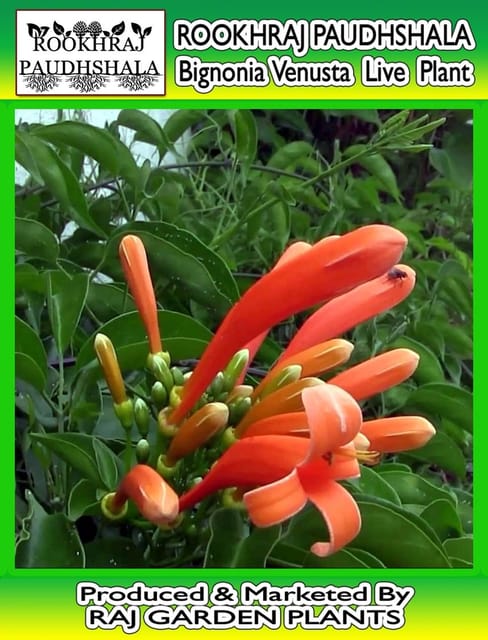
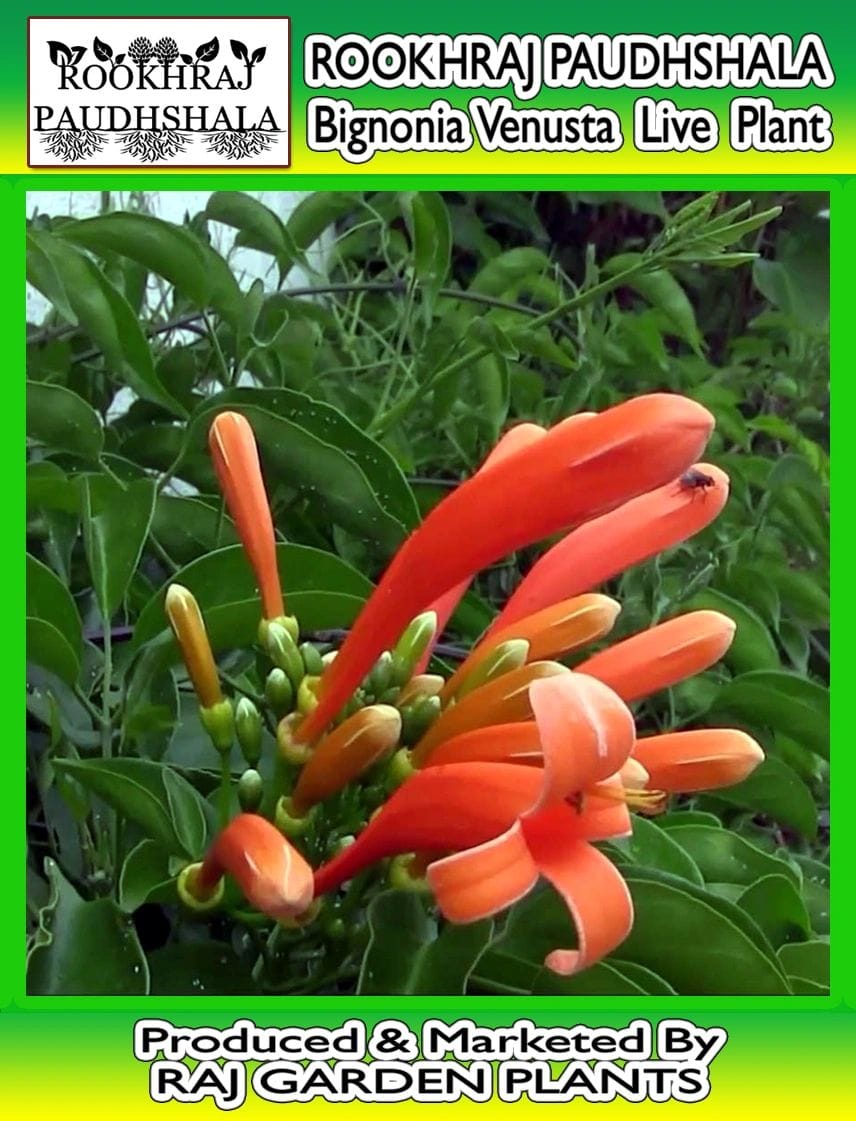
This is a live plant of ROOKHRAJ PAUDHSHALA Bignonia Venusta Live Plant, Pyrostegia venusta Bignonia venusta, commonly known as Orange Trumpet Vine or Flame Vine, is a stunning flowering plant. Here are some key points about Bignonia venusta live plants: Flower Beauty : Bignonia venusta is admired for its striking, trumpet-shaped orange-red flowers that grow in clusters. Climbing Habit : It is a vigorous climbing vine that can cover fences, walls, pergolas, and trellises with its lush foliage and vibrant blooms. Sunlight Requirements : Plant in a spot with full sun to partial shade, providing ample sunlight for optimal flowering. Soil Preference : Well-draining and fertile soil is best. Prepare the soil with organic matter before planting. Watering Needs : Keep the soil consistently moist, especially during the growing season. Adequate watering is crucial for healthy growth and flowering. Pruning : Regular pruning helps control growth, promote branching, and maintain the desired shape. Prune after flowering to encourage new growth. Support and Training : Provide a sturdy support structure for the vine to climb on. Gently guide the vines as they grow to cover the intended area. Fertilization : Feed with a balanced, all-purpose fertilizer during the active growing months (spring and summer) to encourage blooming. Pest and Disease Management : Monitor for pests like aphids, caterpillars, and spider mites. Treat with appropriate measures if infestations occur. Propagation : Bignonia venusta can be propagated from stem cuttings or by layering. Take cuttings from healthy plants and root them in well-draining soil. Attracts Wildlife : The vibrant flowers attract pollinators like butterflies and hummingbirds to your garden. Container Cultivation : Bignonia venusta can be grown in containers, but be prepared to provide strong support for the climbing vines. Winter Care : In colder climates, provide winter protection by mulching the base of the plant and covering it during freezing temperatures. Drought Tolerance : Once established, it exhibits some drought tolerance, but consistent watering is still important for robust growth. Caution : Some parts of the plant can be toxic if ingested, so take care to keep it away from pets and children. Native Origin : Bignonia venusta is native to South America and is cultivated in many tropical and subtropical regions. Landscape Use : Utilize it as a colorful focal point, a privacy screen, or to add vertical interest to your garden. By following these guidelines and adapting them to your specific growing conditions, you can enjoy the captivating beauty of Bignonia venusta and create a vibrant and lively garden space. Growing and Care Tips for Bignonia Venusta (Orange Trumpet Vine or Flame Vine): Sunlight Requirements : Plant in a location that receives full sun to partial shade for optimal growth and flowering. Ensure the plant gets at least 4-6 hours of direct sunlight each day. Soil Preparation : Use well-draining soil that is rich in organic matter. Good drainage is crucial to prevent waterlogging. Incorporate compost or aged manure into the soil before planting. Planting : Dig a hole that is slightly larger than the root ball of the plant. Place the plant in the hole at the same depth as it was in its nursery container. Fill the hole with soil, gently firming it around the plant, and water thoroughly. Watering : Keep the soil consistently moist, especially during the active growing season. Water deeply and thoroughly to encourage deep root growth. Avoid overwatering or letting the plant sit in soggy soil. Mulching : Apply a layer of organic mulch around the base of the plant to retain moisture, suppress weeds, and regulate soil temperature. Support and Training : Provide a sturdy support structure, such as a trellis or arbor, for the vine to climb on. Gently guide the vines as they grow to cover the intended area. Fertilization : Feed with a balanced, slow-release fertilizer during the growing season (spring and summer) to promote healthy growth and flowering. Follow the product instructions for proper application. Pruning : Regularly prune to control growth, maintain shape, and encourage branching. Prune after flowering to remove spent blooms and shape the vine. Pest and Disease Management : Monitor for common pests like aphids, caterpillars, and spider mites. Treat with insecticidal soap or neem oil if infestations occur. Ensure good air circulation around the plant to prevent fungal diseases. Propagation : Bignonia venusta can be propagated from stem cuttings or by layering. Take cuttings from healthy plants and root them in well-draining soil or water. Winter Care : In cooler climates, provide winter protection by mulching the base of the plant and covering it with a frost cloth or blanket during freezing temperatures. Attracting Wildlife : The vibrant flowers of Bignonia venusta attract pollinators like butterflies and hummingbirds, enhancing biodiversity in your garden. Caution : Some parts of the plant can be toxic if ingested, so take care to keep it out of reach of pets and children. Regular Monitoring : Keep an eye on the plant's growth, health, and potential pest or disease issues. Timely intervention is key to maintaining a thriving vine. Landscape Use : Use Bignonia venusta as a colorful focal point, a climbing vine to cover fences and walls, or to add vertical interest to your garden. Remember, while Bignonia venusta is a captivating addition to any garden, proper care and attention are essential for its success. Adjust these guidelines based on your local climate and conditions for the best results.
RGP1109Choose your location
Please provide your delivery pincode to see products available in your area
COD (Cash On Delivery) On request
🎁Gift Coupons: Share your unboxing video & receive an exclusive gift coupon as a thank-you!
Share here
🚫No Claims After Repotting: If a plant is transferred to another pot and gets damaged, no claims will be accepted. Re-potting is at your own risk.
📸Unboxing Video Required: To claim a refund or replacement for any product, you must share an uncut unboxing video upon receiving the item.
⏳Raise Claim Within 24 Hours: To be eligible for any refund/replacement, raise a claim within 24 hours of delivery.(For plants only, for other categories the claim window is 5 days)
| brand | Raj Garden Plants |
This is a live plant of ROOKHRAJ PAUDHSHALA Bignonia Venusta Live Plant, Pyrostegia venusta Bignonia venusta, commonly known as Orange Trumpet Vine or Flame Vine, is a stunning flowering plant. Here are some key points about Bignonia venusta live plants: Flower Beauty : Bignonia venusta is admired for its striking, trumpet-shaped orange-red flowers that grow in clusters. Climbing Habit : It is a vigorous climbing vine that can cover fences, walls, pergolas, and trellises with its lush foliage and vibrant blooms. Sunlight Requirements : Plant in a spot with full sun to partial shade, providing ample sunlight for optimal flowering. Soil Preference : Well-draining and fertile soil is best. Prepare the soil with organic matter before planting. Watering Needs : Keep the soil consistently moist, especially during the growing season. Adequate watering is crucial for healthy growth and flowering. Pruning : Regular pruning helps control growth, promote branching, and maintain the desired shape. Prune after flowering to encourage new growth. Support and Training : Provide a sturdy support structure for the vine to climb on. Gently guide the vines as they grow to cover the intended area. Fertilization : Feed with a balanced, all-purpose fertilizer during the active growing months (spring and summer) to encourage blooming. Pest and Disease Management : Monitor for pests like aphids, caterpillars, and spider mites. Treat with appropriate measures if infestations occur. Propagation : Bignonia venusta can be propagated from stem cuttings or by layering. Take cuttings from healthy plants and root them in well-draining soil. Attracts Wildlife : The vibrant flowers attract pollinators like butterflies and hummingbirds to your garden. Container Cultivation : Bignonia venusta can be grown in containers, but be prepared to provide strong support for the climbing vines. Winter Care : In colder climates, provide winter protection by mulching the base of the plant and covering it during freezing temperatures. Drought Tolerance : Once established, it exhibits some drought tolerance, but consistent watering is still important for robust growth. Caution : Some parts of the plant can be toxic if ingested, so take care to keep it away from pets and children. Native Origin : Bignonia venusta is native to South America and is cultivated in many tropical and subtropical regions. Landscape Use : Utilize it as a colorful focal point, a privacy screen, or to add vertical interest to your garden. By following these guidelines and adapting them to your specific growing conditions, you can enjoy the captivating beauty of Bignonia venusta and create a vibrant and lively garden space. Growing and Care Tips for Bignonia Venusta (Orange Trumpet Vine or Flame Vine): Sunlight Requirements : Plant in a location that receives full sun to partial shade for optimal growth and flowering. Ensure the plant gets at least 4-6 hours of direct sunlight each day. Soil Preparation : Use well-draining soil that is rich in organic matter. Good drainage is crucial to prevent waterlogging. Incorporate compost or aged manure into the soil before planting. Planting : Dig a hole that is slightly larger than the root ball of the plant. Place the plant in the hole at the same depth as it was in its nursery container. Fill the hole with soil, gently firming it around the plant, and water thoroughly. Watering : Keep the soil consistently moist, especially during the active growing season. Water deeply and thoroughly to encourage deep root growth. Avoid overwatering or letting the plant sit in soggy soil. Mulching : Apply a layer of organic mulch around the base of the plant to retain moisture, suppress weeds, and regulate soil temperature. Support and Training : Provide a sturdy support structure, such as a trellis or arbor, for the vine to climb on. Gently guide the vines as they grow to cover the intended area. Fertilization : Feed with a balanced, slow-release fertilizer during the growing season (spring and summer) to promote healthy growth and flowering. Follow the product instructions for proper application. Pruning : Regularly prune to control growth, maintain shape, and encourage branching. Prune after flowering to remove spent blooms and shape the vine. Pest and Disease Management : Monitor for common pests like aphids, caterpillars, and spider mites. Treat with insecticidal soap or neem oil if infestations occur. Ensure good air circulation around the plant to prevent fungal diseases. Propagation : Bignonia venusta can be propagated from stem cuttings or by layering. Take cuttings from healthy plants and root them in well-draining soil or water. Winter Care : In cooler climates, provide winter protection by mulching the base of the plant and covering it with a frost cloth or blanket during freezing temperatures. Attracting Wildlife : The vibrant flowers of Bignonia venusta attract pollinators like butterflies and hummingbirds, enhancing biodiversity in your garden. Caution : Some parts of the plant can be toxic if ingested, so take care to keep it out of reach of pets and children. Regular Monitoring : Keep an eye on the plant's growth, health, and potential pest or disease issues. Timely intervention is key to maintaining a thriving vine. Landscape Use : Use Bignonia venusta as a colorful focal point, a climbing vine to cover fences and walls, or to add vertical interest to your garden. Remember, while Bignonia venusta is a captivating addition to any garden, proper care and attention are essential for its success. Adjust these guidelines based on your local climate and conditions for the best results.
Products listed on Paudhewale.com are provided by individual sellers. We recommend referring to the product label before use. Paudhewale.com is not liable for any loss arising from misuse of products sold on our platform.
![Rajni Gandha Double dwarf Flower bulb pack of 2 [RAJ GARDEN PLANTS]](https://www.paudhewale.com/s/660a356584d1ac2391ae69de/6a0b071f9beb607fbcf720ba/blob-9dab8e4-640x640.png "Rajni Gandha Double dwarf Flower bulb pack of 2 [RAJ GARDEN PLANTS]")