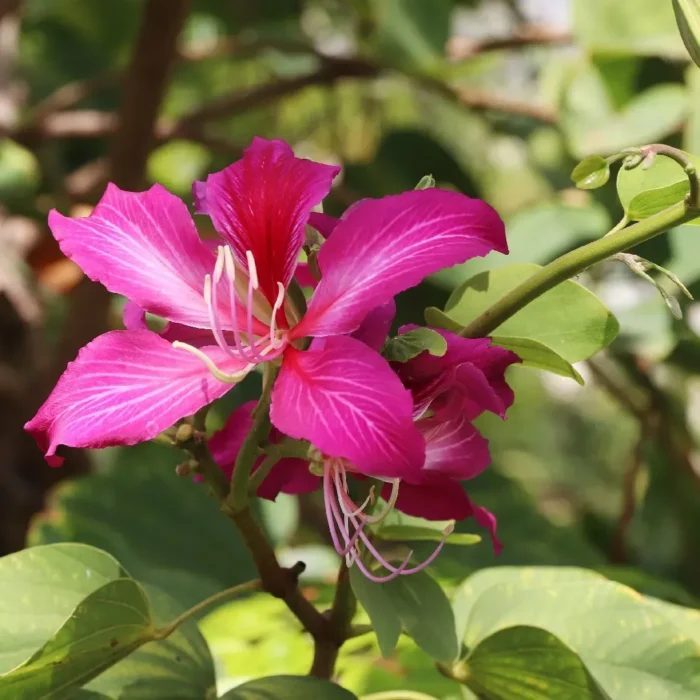
Bauhinia purpurea (Dark Pink) – also called the Purple Orchid Tree or Butterfly Tree – is one of the most eye-catching flowering trees for tropical and subtropical climates. It produces masses of large, orchid-like blooms…
Bauhinia purpurea (Dark Pink) – also called the Purple Orchid Tree or Butterfly Tree – is one of the most eye-catching flowering trees for tropical and subtropical climates. It produces masses of large, orchid-like blooms in deep pinkish-purple shades that resemble butterflies hovering over the tree. This semi-evergreen tree provides both shade and beauty, and its unique, twin-lobed leaves add texture to landscapes even when not in bloom. Because it’s fast-growing, drought-tolerant, and low-maintenance, it’s an excellent choice for avenue planting, gardens, and institutional landscapes.
🌟 Features / Benefits
-
Exotic Flowers: Large, dark pink to purple blossoms look like orchids and attract pollinators.
-
Shade & Ornamental Value: Fast-growing canopy provides shade along roadsides, gardens, and parks.
-
Low Maintenance: Drought-tolerant after establishment, thrives in average garden conditions.
-
Multi-Purpose: Excellent as a focal point tree, backdrop plant, or avenue tree.
-
Wildlife-Friendly: Supports bees, butterflies, and nectar-feeding birds.
-
Unique Foliage: Camel-foot shaped leaves are attractive even when not flowering.
🏡 Decorative / Ideal Places
-
Roadside and avenue plantations
-
Parks, resorts, and public gardens
-
Large home gardens or farmhouses
-
School/college campuses & institutional landscaping
-
As a boundary or driveway tree
-
Large planters for courtyards (young plants)
✅ Uses & Care Tips
-
Purpose: Ornamental shade tree, avenue plant, butterfly & bee attractor.
-
Light Requirements: Full sunlight for best flowering.
-
Watering: Moderate; regular watering until established, then only during dry periods.
-
Fertilizing: Use a balanced NPK fertilizer or well-decomposed compost at the start of the rainy season to encourage blooms.
-
Pruning: Light pruning after the flowering season shapes the canopy and encourages new growth.
-
Propagation: By seeds or semi-hardwood cuttings in the rainy season.
-
Maintenance Level: Low; suitable for low-input landscapes.