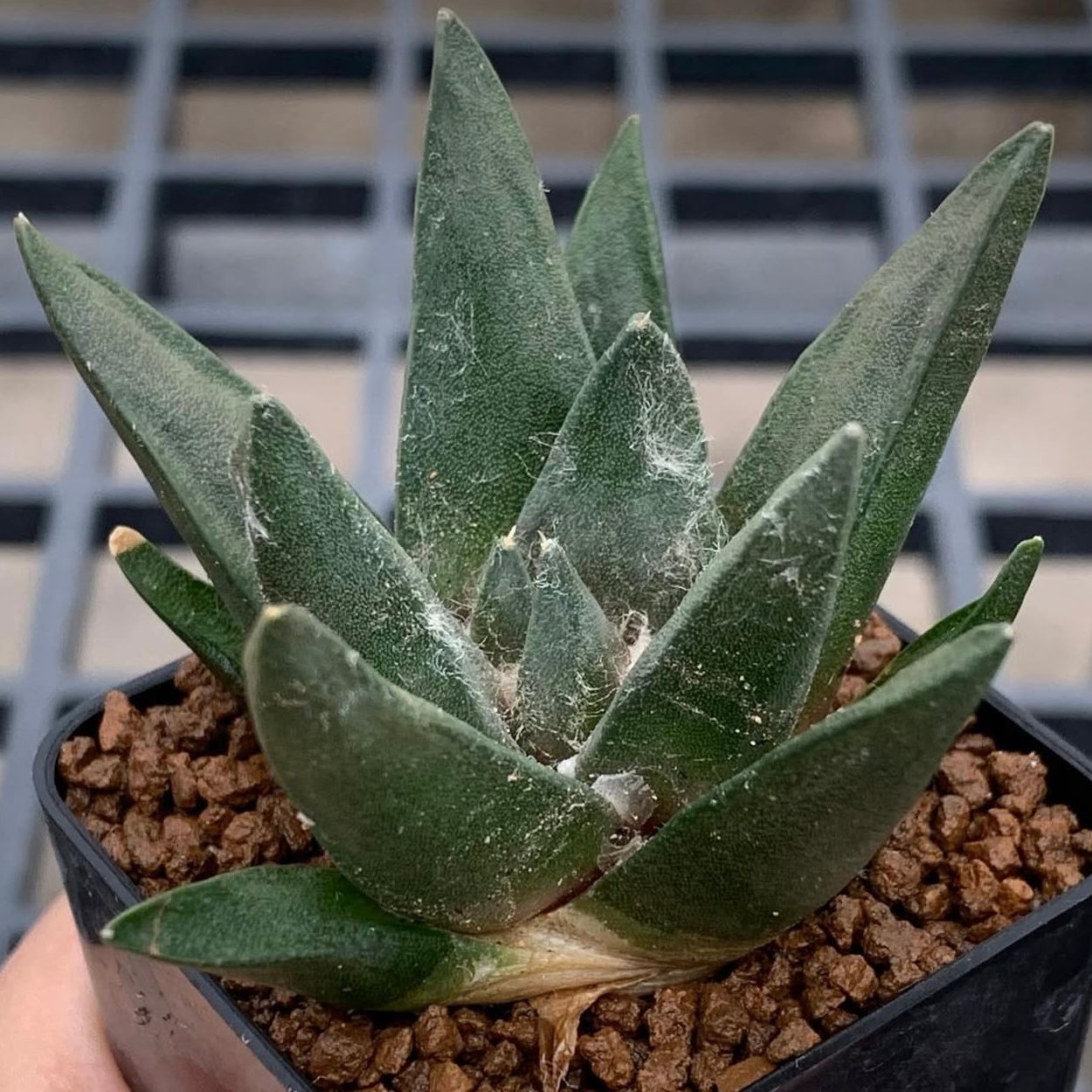
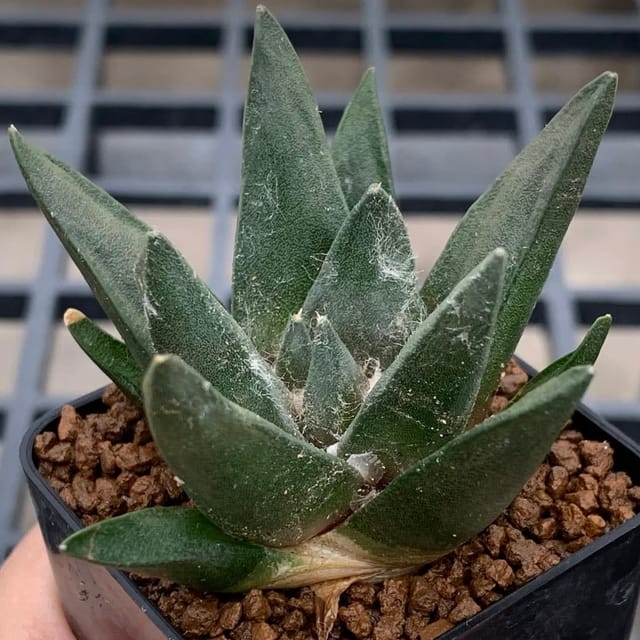
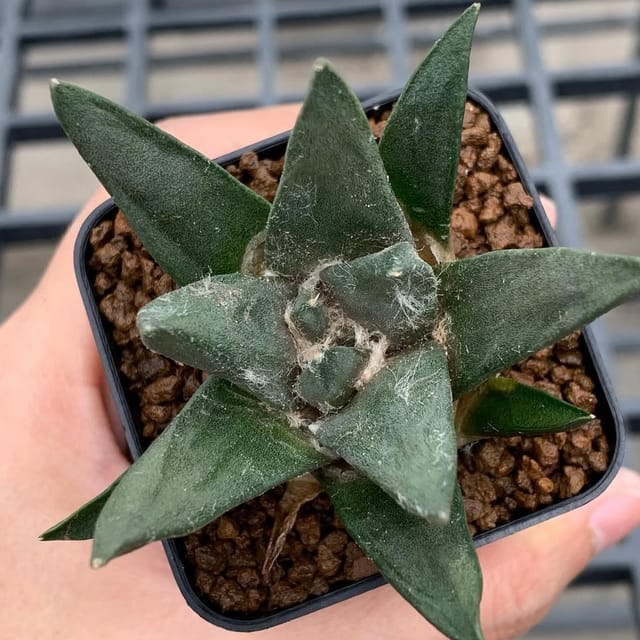
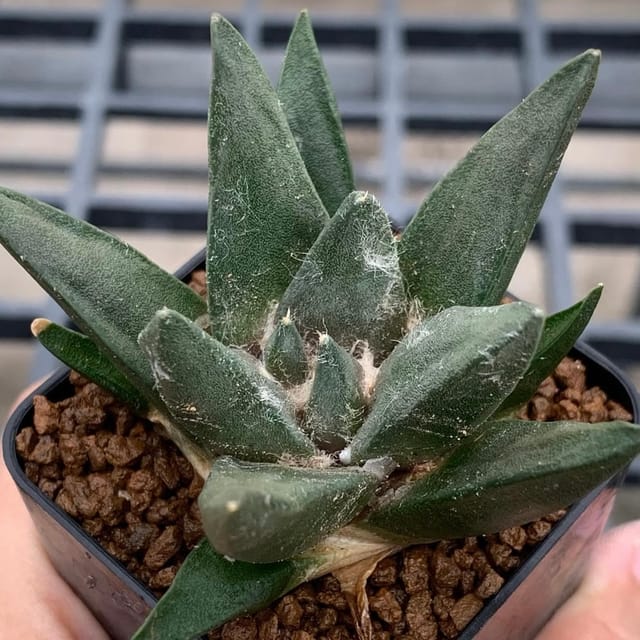
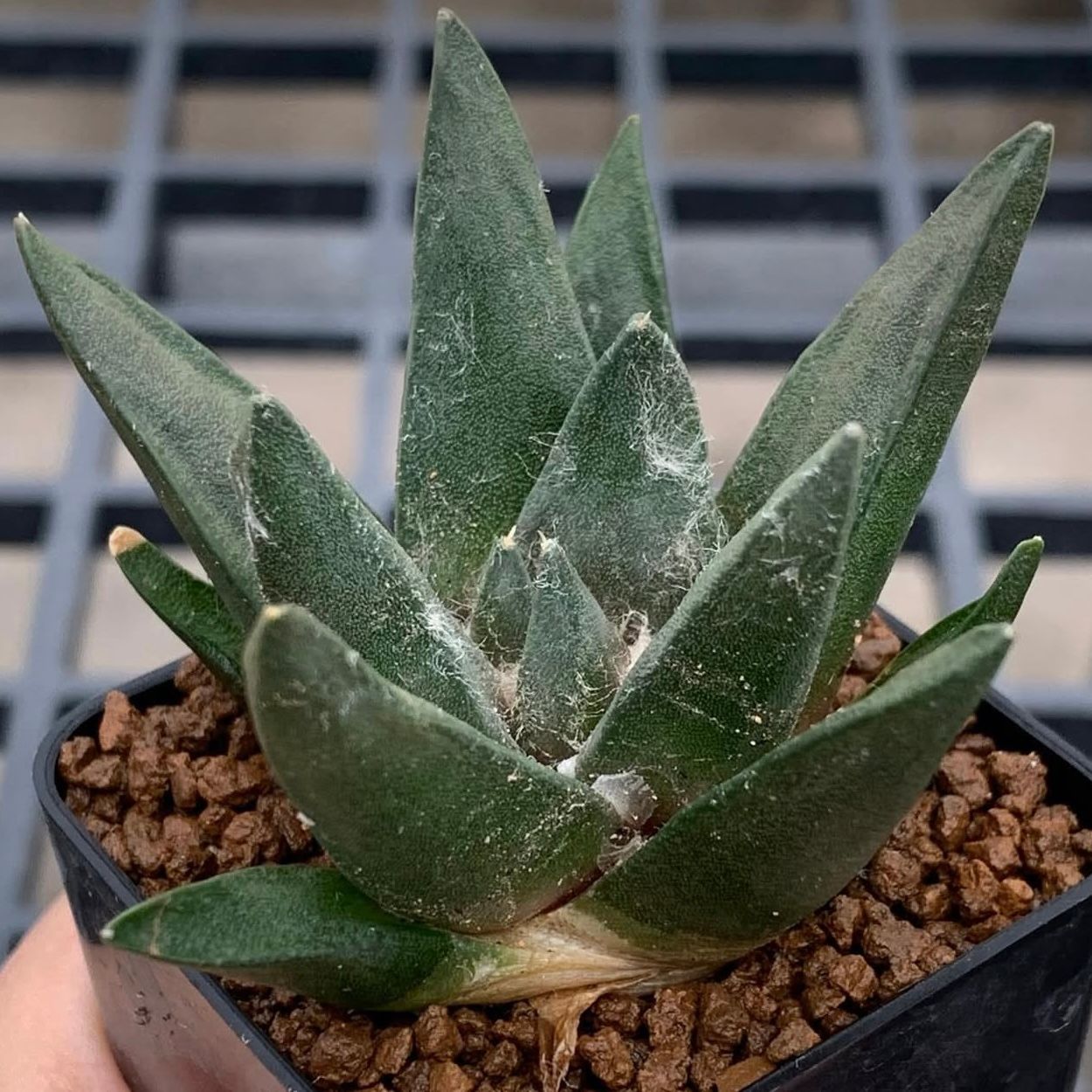
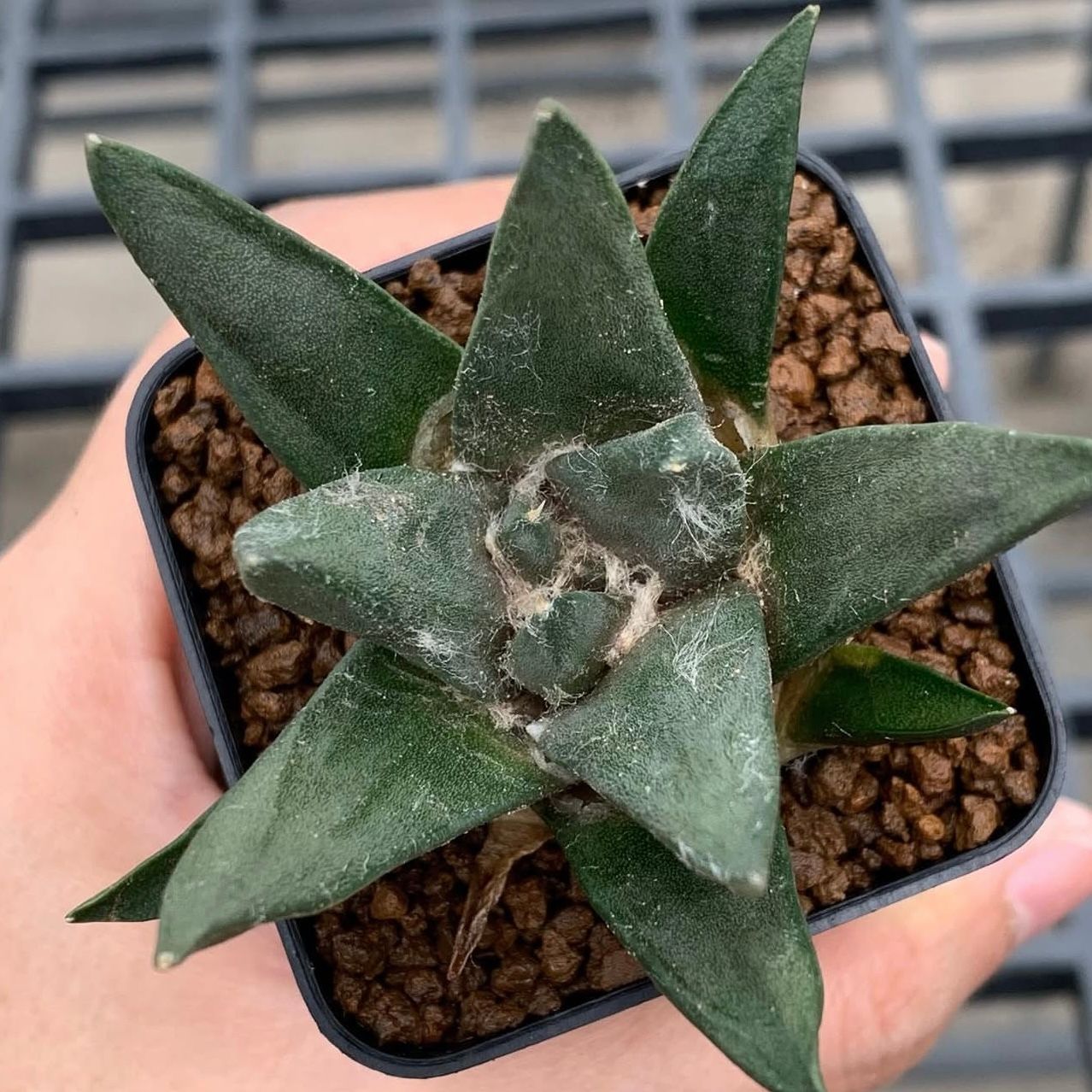
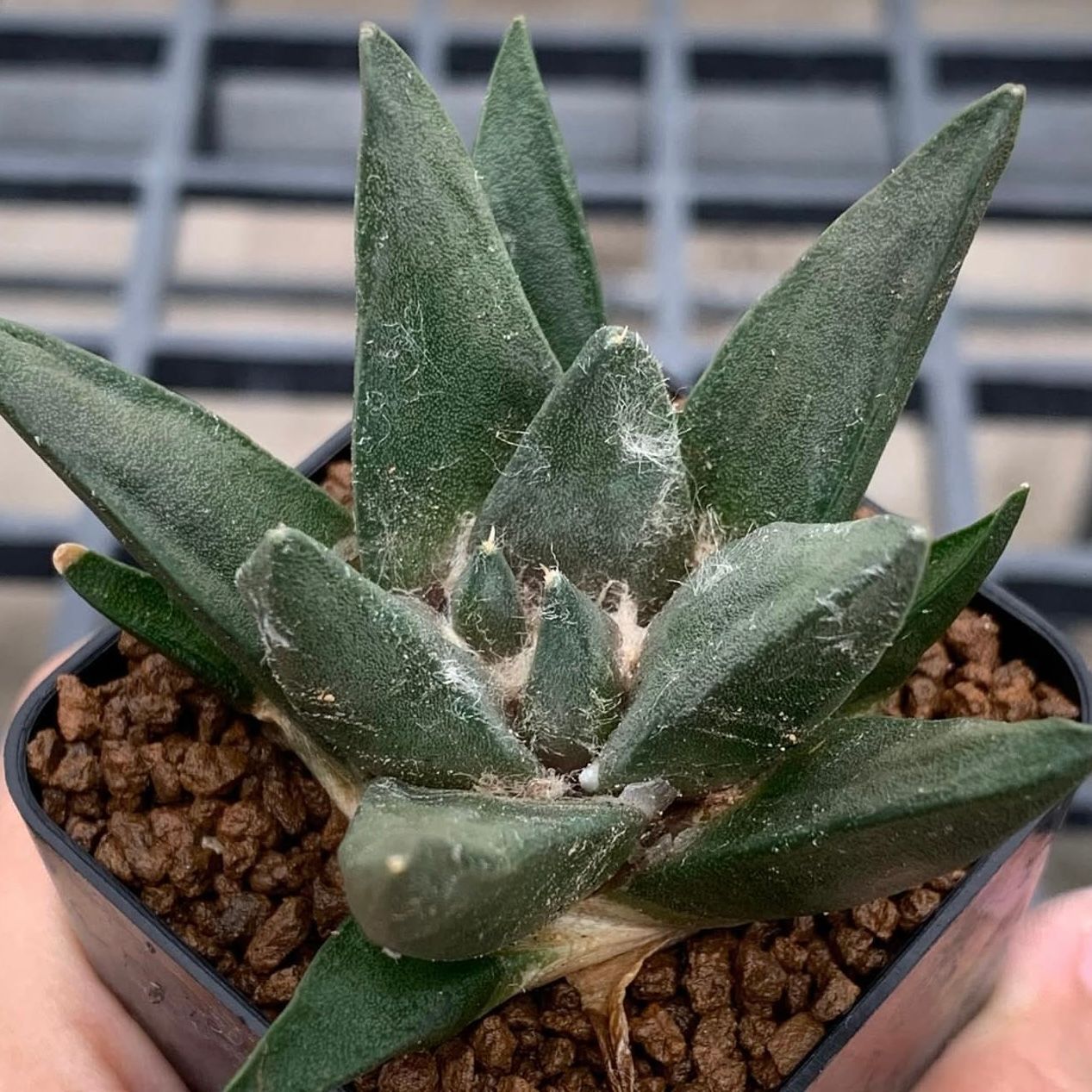
Ariocarpus trigonus is one of the larger and more robust species within its genus. It is native to the Chihuahuan Desert in Mexico, primarily found in the states of Tamaulipas and Nuevo León.
Unlike many other cacti, this species lacks traditional spines and instead features long, leaf-like tubercles that give it a unique, prehistoric appearance.
Key Characteristics
• Tubercules: The most striking feature is its long, slender, triangular tubercles (hence the name trigonus). They are typically olive-green to grey-green and can grow up to 5–8 cm long.
• Size: It is a relatively large Ariocarpus, with the entire plant body reaching up to 25 cm in diameter over many decades.
• Flowers: It produces beautiful, satiny flowers from the center of the plant. These are usually creamy yellow to pale white, appearing in late autumn or early winter (October to December).
• Growth Rate: Like most members of this genus, it is extremely slow-growing. A specimen just a few centimeters wide may already be several years old.
Cultivation and Care
Because of its specialized root system, A. trigonus requires a specific approach to keep it healthy:
• The Taproot: It possesses a massive, turnip-like taproot that stores water and nutrients. This makes the plant highly susceptible to rot if the soil stays damp.
• Soil Mix: Use an almost entirely mineral-based substrate. A mix of 70–80% pumice, lava rock, or perlite with a small amount of sandy loam works best. Avoid peat or heavy potting soils.
• Potting: Deep pots are essential to accommodate the long taproot. Ensure the pot has excellent drainage holes.
• Watering: Water only during the active growing season (spring and late summer). It should be kept completely dry during the winter dormancy period to prevent root loss.
• Light: It thrives in bright, indirect light or filtered sunlight. In very hot climates, intense midday sun can occasionally scorch the tubercles.