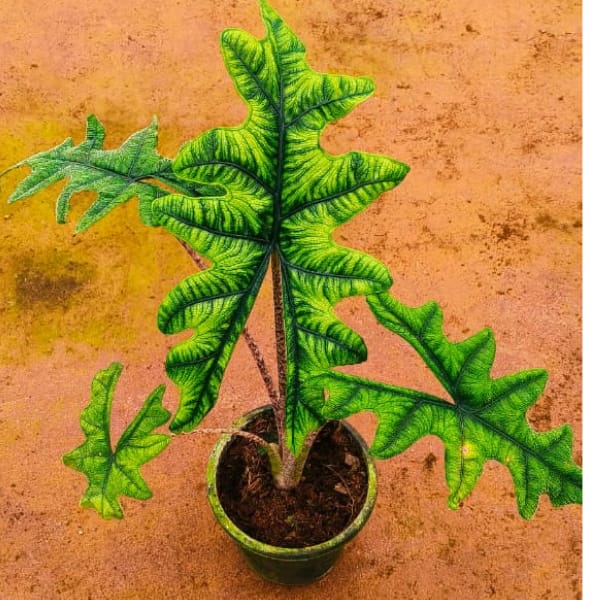
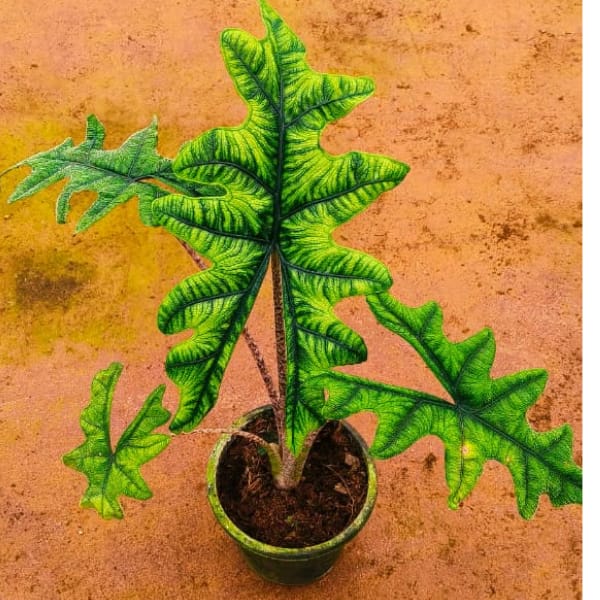
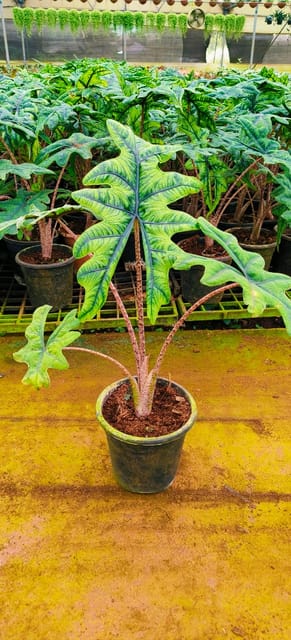
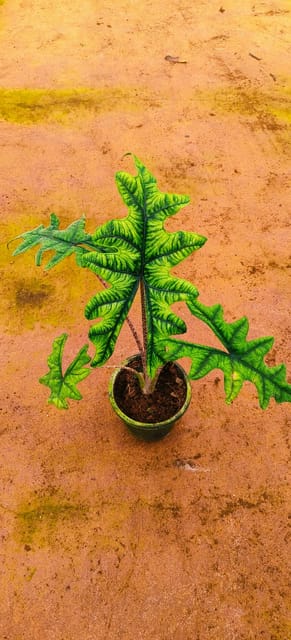
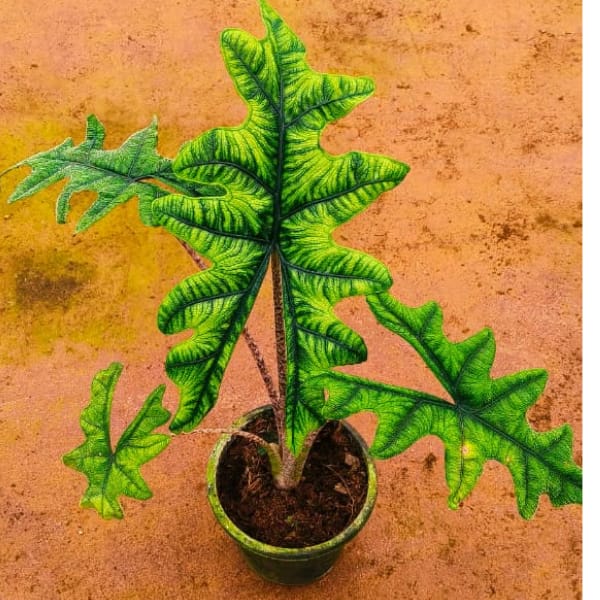
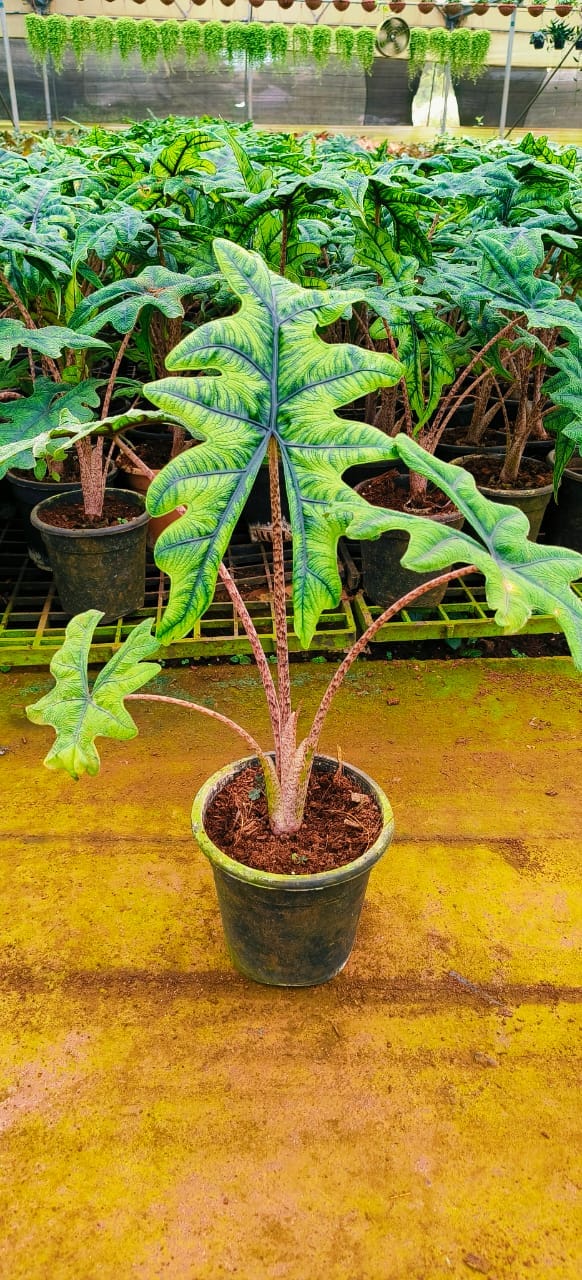
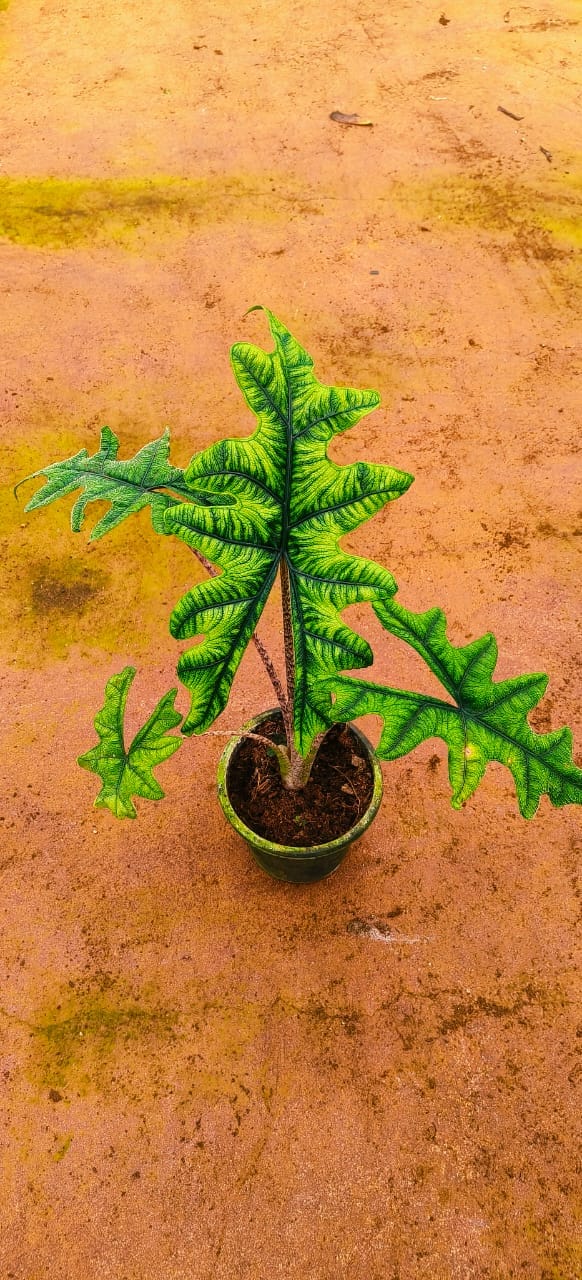
The Alocasia Jacklyn is an extraordinary and rare houseplant celebrated for its deeply lobed, arrow-shaped leaves and dramatic dark green venation. Also known as Alocasia tandurusa, this plant originates from the lush tropical forests of Indonesia, where it grows under filtered sunlight and high humidity. Its leaves showcase a sculptural form with an almost fern-like silhouette, making it one of the most visually striking Alocasia varieties.
Each leaf displays a unique marbled texture, with subtle patterns that look hand-drawn by nature. As the plant matures, its leaves grow larger, more elongated, and more intricately lobed, turning it into a standout statement piece in any indoor collection.
The plant features a thick, sturdy petiole marked with subtle speckles—another hallmark of its exotic genetics. This rare aroid is admired by collectors because of its unusual morphology, fast growth in the right conditions, and ability to transform a space with tropical elegance.
Growth Habit
Alocasia Jacklyn grows upright, reaching 1–2 feet indoors, depending on pot size and conditions. With proper humidity and bright, indirect light, it consistently pushes out new leaves. Its growth is quicker during warm months and slows during winter.
Why Alocasia Jacklyn is Special
Stunning, deeply lobed foliage
Rare and sought-after among aroid enthusiasts
Distinct dark veins on bright green leaves
Leaf texture resembles reptile skin or fine brush strokes
Adds instant tropical character to any room
Works well as a centerpiece plant
Detailed Care Guide
Light:
Prefers bright, indirect light—similar to filtered jungle canopy lighting. Direct sun may scorch the delicate leaves.
Watering:
Keep the soil lightly moist. Water when the top 1 inch feels dry. Avoid overwatering to prevent root rot.
Humidity:
Thrives in humidity levels 60–80%. Mist occasionally or use a humidifier for best results.
Temperature:
Ideal range: 18–28°C. Keep away from cold drafts and sudden temperature drops.
Soil:
Use a chunky, well-aerated aroid mix containing cocopeat, perlite, pine bark, and compost.
Fertilizer:
Feed monthly with a balanced liquid fertilizer during spring and summer.
Common Issues:
Drooping leaves: Usually underwatering or low humidity
Yellowing: Overwatering
Brown edges: Low humidity or too much direct sunlight